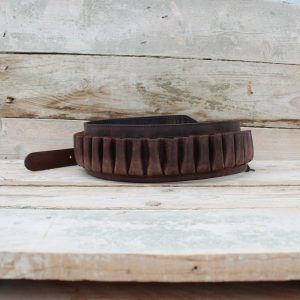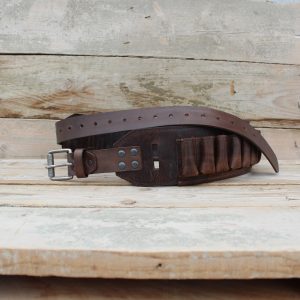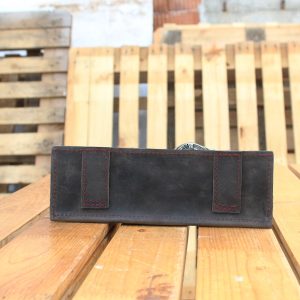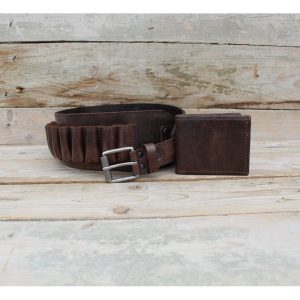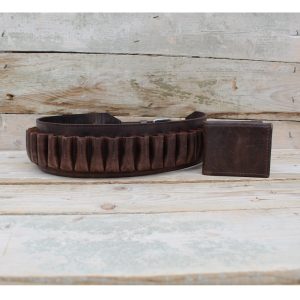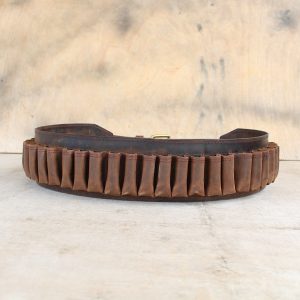
The 12GA is the most powerful and versatile shotgun gauge used in modern hunting. It handles ducks, geese, pheasants, and mixed upland scenarios with authority.
But 12GA shells are heavier. Bulkier. More demanding on equipment.
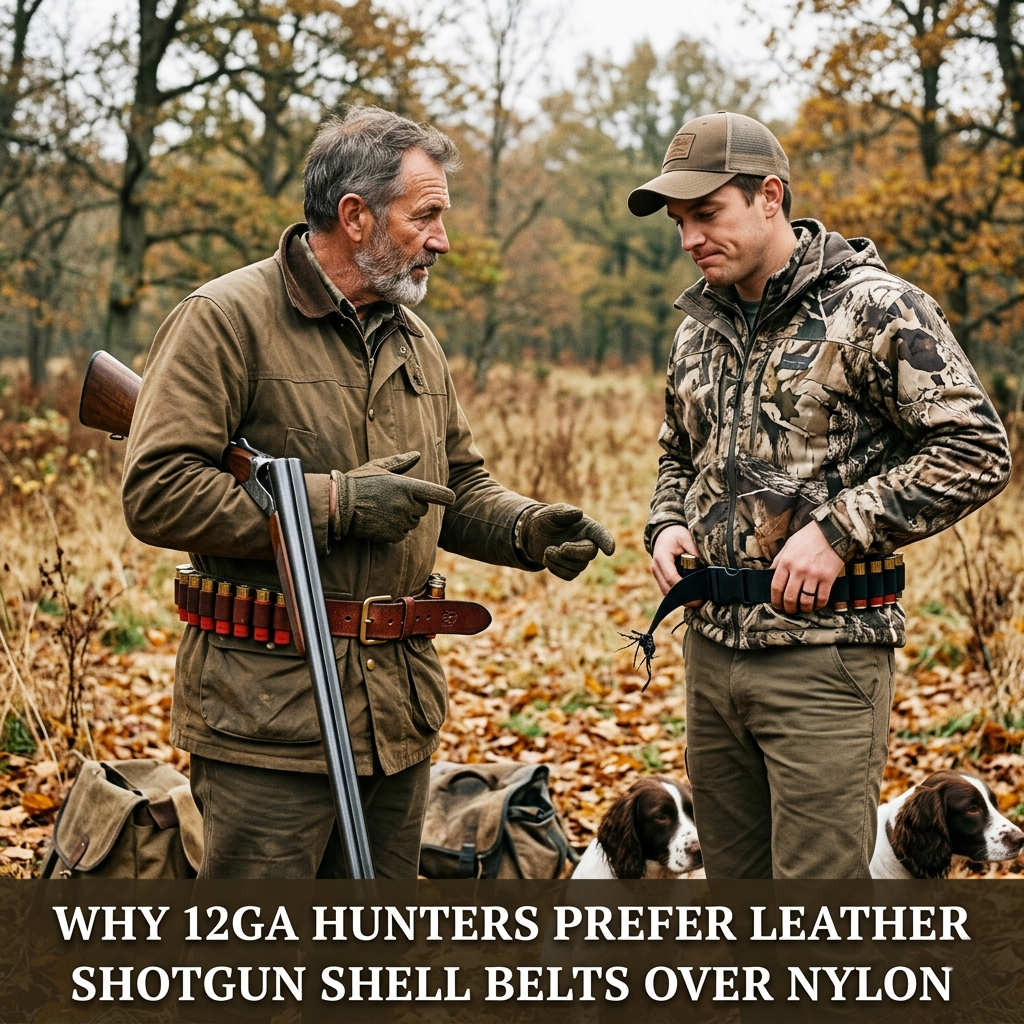
That reality is why experienced hunters eventually move away from elastic or nylon shell belts and choose structured leather systems instead.
This article explains why leather performs better under 12GA load weight — and why serious waterfowl and upland hunters prefer it for long-term reliability.
For a complete performance breakdown of 12GA load weight and system planning, see our 12GA Shotgun Hunting Guide.
12GA Shells Expose Weak Materials Quickly
A standard 12GA steel load weighs significantly more than 20GA or 28GA shells.
Carry 25–30 rounds and you place:
- 2.5 to 4 pounds of ammunition
- Continuous outward pressure on belt loops
- Downward force on stitching and buckle hardware
Under this weight, lightweight materials begin to fail.
Common issues with nylon or elastic belts:
- Loop stretch
- Shell looseness
- Sagging on one side
- Uneven retention
- Reduced durability in wet conditions
12GA accelerates wear on anything not built structurally strong.
Why Leather Performs Better Under 12GA Load
Full-grain leather offers structural advantages that synthetic materials cannot replicate.
1️⃣ Natural Compression Grip
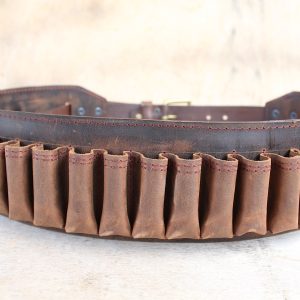
Leather compresses around each shell.
Over time, it molds precisely to 12GA diameter.
This creates:
- Consistent shell retention
- Smooth extraction
- Reduced bounce during movement
Elastic loops lose tension permanently once overstretched. Leather maintains controlled resistance.
2️⃣ Weight Distribution Stability
12GA shells are heavy enough to shift poorly designed belts.
Structured leather distributes weight evenly across the waist.
It prevents concentrated sagging and reduces hip fatigue during long walks into:
- Marshes
- Goose fields
- Upland terrain
Balanced distribution improves comfort and posture.
3️⃣ Resistance to Moisture and Cold
Waterfowl hunting introduces:
- Rain
- Marsh water
- Snow
- Freezing temperatures
Nylon absorbs moisture. Elastic tightens unevenly in cold weather.
Properly conditioned full-grain leather maintains structural integrity and consistent loop tension even in late-season hunts.
For cold-weather considerations specific to goose hunting, see our Goose Hunting Gear Guide.
Long-Term Durability Matters for 12GA Users
Hunters who shoot 12GA frequently put more cumulative stress on their belts.
Over multiple seasons:
- Stitching fatigue appears
- Loop gaps widen
- Buckles weaken
- Retention declines
A well-constructed leather shotgun shell belt resists deformation and improves with use.
It becomes part of the hunter’s system rather than a disposable accessory.
Customization Matters for 12GA Performance
Not all 12GA hunters carry the same load.
Some use:
- 2¾” steel loads for ducks
- 3″ magnums for mixed hunts
- 3½” heavy goose loads
Shell diameter and length consistency matter.
A properly built belt should match:
- Gauge (12GA specifically structured)
- Shell size
- Loop count
- Waist measurement
- Preferred capacity
Customization ensures:
- Correct loop tension
- Even shell spacing
- Balanced weight distribution
- Personalized fit
A belt designed specifically for 12GA avoids generic sizing compromises.
Capacity Options and Load Strategy
Some hunters prefer:
- 20-shell minimalist setups
- 25-shell balanced systems
- 30+ shell heavy goose configurations
Leather belts can be built with:
- Custom loop counts
- Reinforced stitching
- Structured spacing
- Proper width for weight support
Overloading a belt not engineered for 12GA creates fatigue and instability. Custom construction allows hunters to choose the correct configuration from the start.
The Professional Advantage
Hunters who rely heavily on 12GA tend to prioritize:
- Consistency
- Structural integrity
- Long-term performance
- Refined field efficiency
Leather provides a stable platform for repeated use.
As it molds to the body, comfort increases.
As loops conform to shell diameter, extraction becomes predictable.
That predictability improves reload rhythm during fast-moving flights.
Why Many Experienced Hunters Eventually Switch
It is common for hunters to begin with:
- Elastic shell belts
- Lightweight synthetic carriers
After several seasons of heavy 12GA use, they encounter:
- Stretch
- Deformation
- Reduced retention
- Early replacement cycles
Leather eliminates those recurring issues.
It is chosen not for appearance, but for performance under load.
When Leather Makes the Most Sense
Leather shotgun shell belts are particularly advantageous for:
- 12GA waterfowl hunters
- Goose hunters using magnum loads
- Late-season cold-weather hunts
- Hunters carrying 25+ shells regularly
- Those who prioritize long-term durability
If you rely on 12GA as your primary gauge, your belt should match that commitment.
For a complete overview of how 12GA integrates into your hunting system, return to our 12GA Shotgun Hunting Guide.
Final Thoughts
12GA demands more from your gear.
More weight.
More pressure.
More structural integrity.
Leather shotgun shell belts provide:
- Stability under load
- Consistent shell retention
- Balanced distribution
- Long-term durability
- Custom configuration options
When built specifically for gauge, size, loop count, and fit, a belt becomes part of your field system — not just a place to store ammunition.
For hunters who shoot 12GA regularly, that difference becomes clear over time.
Frequently Asked Questions (FAQ)
Why do 12GA hunters prefer leather shell belts?
12GA shells are heavier and place more stress on loops and stitching. Leather resists stretching, maintains retention, and distributes weight more evenly than elastic or nylon alternatives.
Are leather shotgun shell belts better for magnum loads?
Yes. Magnum 12GA loads increase shell weight and pressure on belt loops. Reinforced leather belts handle this stress more effectively and maintain structural integrity over time.
Can a shotgun shell belt be customized for 12GA?
Yes. A properly built belt can be customized for gauge, waist size, number of loops, shell length, and color preferences. Custom sizing ensures proper shell retention and balanced weight distribution.
How many shells should a 12GA leather belt hold?
Most hunters choose between 20 and 30 loops depending on hunting style. Capacity should balance preparedness and comfort without overloading the belt.
Does leather stretch over time?
High-quality full-grain leather molds to the body but does not permanently overstretch when properly constructed and maintained. It retains structure better than elastic materials.
Explore Our Handmade Leather Shotgun Shell Belts
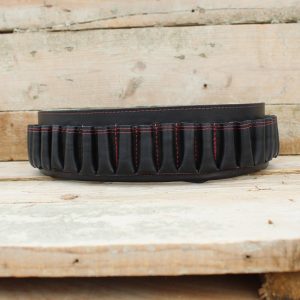
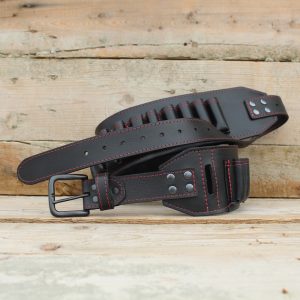
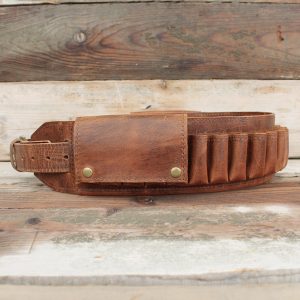
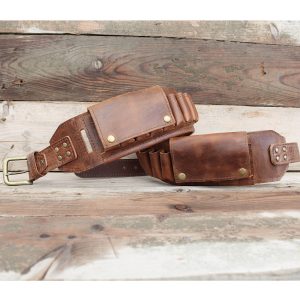
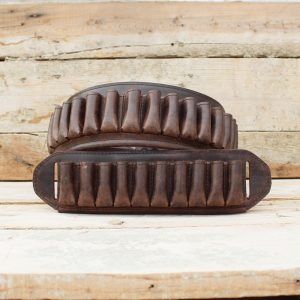
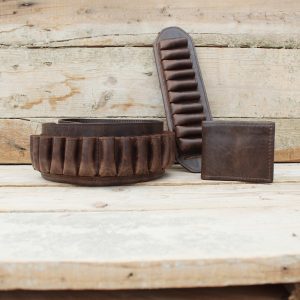
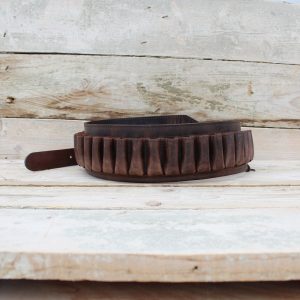
For hunters who demand reliability without compromise, our collection of full-grain leather shotgun shell belts is crafted to perform season after season. Each belt is handmade with precision-sized loops for 12GA, 16GA, 20GA, and 28GA shells, reinforced stitching, and durable hardware designed for real field use.
Balanced weight distribution, secure shell retention, and clean access under pressure make these belts a trusted part of a serious hunting setup.
Explore the complete collection below and choose the belt built for your next season in the field.
12 Gauge Leather Cartridge Belt – Handmade Crazy Horse Leather – Custom 12GA • 16GA • 20GA
Original price was: $262.$192Current price is: $192.9.3×62 Cartridge Belt Slide – Handmade Crazy Horse Leather with Flap Closure
Original price was: $100.$80Current price is: $80.Black Leather Cartridge Belt – Handmade for 12GA • 16GA • 20GA
Original price was: $262.$191Current price is: $191.Brown Crazy Horse Leather Cartridge Belt– 12GA/16GA/20GA/28GA
Original price was: $260.$193Current price is: $193.Custom .30-06 Leather Hunting Set – Cartridge Slide & Belt
Original price was: $146.$145Current price is: $145.Custom Leather Cartridge Belt – Handmade Crazy Horse | 12GA, 16GA & 20GA
Original price was: $310.$210Current price is: $210.Custom Leather Cartridge Belt Slide
Original price was: $150.$80Current price is: $80.Dual-Flap Leather Cartridge Belt – Handmade for 12GA • 16GA • 20GA
Original price was: $265.$195Current price is: $195.Flap-Closure Leather Cartridge Belt – 12GA • 16GA • 20GA
Original price was: $420.$300Current price is: $300.Handmade .308 Winchester Leather Cartridge Belt Slide
Original price was: $140.$95Current price is: $95.Handmade Crazy Horse Leather Cartridge Belt & Shoulder Bag Set | 12GA • 16GA • 20GA • 28GA
Original price was: $420.$299Current price is: $299.Handmade Leather Cartridge Belt & Wallet Set – 12GA/16GA/20GA
Original price was: $380.$290Current price is: $290.Handmade Leather Cartridge Belt Slide
Original price was: $120.$70Current price is: $70.Heritage Leather Cartridge Belt – Handmade for 12GA • 16GA • 20GA
Original price was: $270.$191Current price is: $191.Hybrid Leather Cartridge Belt – 12GA • 16GA • 20GA
Original price was: $400.$280Current price is: $280.Leather Cartridge Belt & Cartridge Belt Slide Set – Handmade for 12GA • 16GA • 20GA
Original price was: $300.$240Current price is: $240.Leather Cartridge Belt & Matching Slide Set
Original price was: $390.$290Current price is: $290.Leather Cartridge Belt, Cartridge Belt Slide & Wallet Set – Handmade for 12GA • 16GA • 20GA
Original price was: $360.$290Current price is: $290.Matching Set of 2 Leather Cartridge Belt Slides
Original price was: $200.$140Current price is: $140.Personalised Crazy Horse Leather Cartridge Belt | 12GA • 16GA • 20GA
Original price was: $290.$190Current price is: $190.Premium Leather Cartridge Belt – 12GA • 16GA • 20GA
Original price was: $450.$260Current price is: $260.