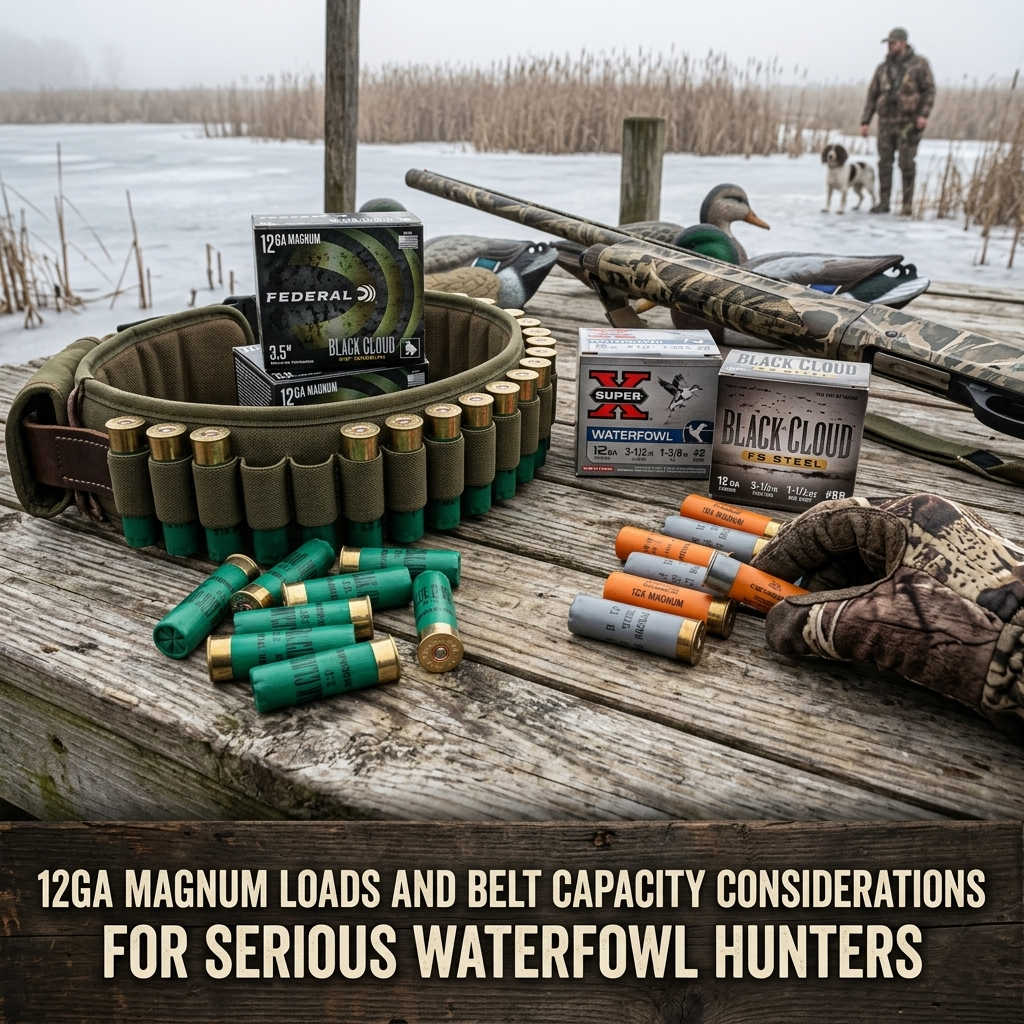
Magnum 12GA loads are built for demanding conditions. Late-season geese, high winds, extended pass shooting, and large migratory birds often require heavier payloads and increased velocity.
But magnum performance comes with trade-offs.
Heavier shells mean greater recoil, increased belt weight, added structural stress, and higher fatigue during long hunts. If your shotgun shell belt is not engineered to support magnum loads, weaknesses appear quickly.
This guide explains how 12GA magnum loads affect belt capacity, weight distribution, and long-term durability — and how to build a system that performs under pressure.
For a complete overview of 12GA systems, see our 12GA Shotgun Hunting Guide.
What Qualifies as a 12GA Magnum Load?
Standard 12GA waterfowl loads typically include:
- 2¾” shells
- 1 oz to 1¼ oz payload
Magnum loads generally include:
- 3″ shells
- 3½” shells
- 1⅜ oz to 1⅝ oz payload
- Larger shot sizes (#BB, #2, #1)
These loads are commonly used for:
- Canada goose hunting
- Snow goose hunting
- Wind-heavy open fields
- Late-season waterfowl
Magnum loads increase pellet count and energy — but they also increase shell size and weight.
The Weight Reality of Magnum Loads
A single 3″ or 3½” magnum shell can weigh significantly more than a standard 2¾” load.
If you carry:
- 25 standard 12GA shells → approximately 2.2–2.5 pounds
- 25 magnum shells → often 3+ pounds
At 30–35 magnum shells, you may carry close to 4 pounds of ammunition on your waist.
That weight creates:
- Constant downward force
- Increased loop expansion pressure
- Buckle tension strain
- Stitching fatigue over time
This is where belt engineering becomes critical.
Why Magnum Loads Stress Belts Differently
Magnum shells affect belts in three key ways:
1️⃣ Increased Diameter and Length
3″ and 3½” shells require:
- Consistent loop sizing
- Proper retention depth
- Structured material strength
If loops are too loose, shells bounce during movement.
If loops are too tight, extraction becomes slow and inconsistent.
Precision construction matters.
2️⃣ Higher Outward Pressure on Loops
Heavier shells push outward constantly against:
- Leather tension
- Stitch lines
- Loop anchoring points
Over time, inferior belts begin to:
- Stretch unevenly
- Gap between loops
- Lose shell retention
Magnum loads accelerate wear on poorly built systems.
3️⃣ Recoil-Induced Movement
Magnum loads produce stronger recoil.
Repeated recoil cycles can:
- Shift belt position
- Stress buckle hardware
- Loosen poorly anchored components
A belt must maintain alignment under dynamic shooting conditions.
Ideal Belt Capacity for 12GA Magnum Loads
For magnum waterfowl hunting, the recommended shell count is typically lower than standard loads.
Suggested Carry Range:
- 20–25 shells for heavy goose hunting
- 25–30 maximum if belt is properly structured
Exceeding 30 magnum shells often introduces unnecessary fatigue.
Instead of maximizing capacity, focus on:
- Efficient shot selection
- High-quality load choice
- Proper decoy strategy
- Maintaining reserve shells in a blind bag
Overloading your belt reduces mobility and increases strain without improving performance.
Structural Features Required for Magnum Loads
When selecting a shotgun shell belt for magnum 12GA loads, look for:
- Full-grain leather construction
- Reinforced loop stitching
- Even shell spacing
- Durable buckle anchoring
- Balanced weight distribution
Full-grain leather performs particularly well under magnum weight because it:
- Compresses naturally around shells
- Resists tearing
- Maintains long-term loop integrity
- Adapts to the body over time
Synthetic belts often stretch permanently after repeated heavy-load use.
Cold Weather and Magnum Performance
Goose hunting often occurs in freezing conditions.
Cold temperatures increase:
- Material stiffness
- Loop contraction
- Extraction resistance
Inferior materials become brittle. Elastic tightens unevenly.
Properly conditioned leather maintains structural stability while preserving consistent shell retention — even in late-season hunts.
For cold-weather gear breakdowns, see our Goose Hunting Gear Guide.
When Should You Choose Magnum Loads?
Magnum 12GA loads are ideal when:
- Hunting large Canada geese
- Shooting in strong wind
- Taking extended-range shots
- Targeting high-flying migratory flocks
They are not necessary for:
- Early-season decoying ducks
- Controlled timber shooting
- Close-range setups
Choosing the right load reduces unnecessary belt stress and fatigue.
Build Your System Around Realistic Conditions
The key to magnum load management is balance.
Ask:
- How far are typical shots?
- What is the wind condition?
- How mobile will the hunt be?
- Do I need 30+ magnum shells on my waist?
Often, carrying 20–25 well-selected magnum loads provides more than enough capability without sacrificing comfort.
For a full system-level understanding of 12GA load planning and belt engineering, revisit our 12GA Shotgun Hunting Guide.
Final Thoughts
12GA magnum loads deliver power and range when conditions demand it. But they increase physical and structural demands on your shotgun shell belt.
A well-constructed belt distributes weight evenly, maintains loop retention, and withstands recoil stress.
Serious waterfowl hunters build their gear around performance — not just capacity.
Carry what you need.
Choose loads intentionally.
Match your belt to your ammunition.
Frequently Asked Questions (FAQ)
Do 12GA magnum shells stretch shotgun shell belts?
Magnum shells place more outward pressure on loops due to increased weight and size. Inferior materials may stretch over time. Full-grain leather belts with reinforced stitching resist permanent deformation better than elastic or lightweight synthetic belts.
How many 3-inch 12GA shells should I carry for goose hunting?
Most experienced goose hunters carry 20–25 magnum shells. Carrying more than 30 often increases fatigue without significantly improving effectiveness.
Are 3½-inch 12GA shells too heavy for shell belts?
They are heavier and require strong belt construction. A properly built leather shotgun shell belt can support them, but capacity should be moderated to maintain comfort and balance.
Is a leather belt better for magnum 12GA loads?
Full-grain leather performs well under heavy load because it resists stretching and maintains structural integrity over time. It distributes weight evenly and adapts to repeated use.
Should I use magnum loads for duck hunting?
Magnum loads are typically unnecessary for close-range duck hunting. They are more useful for large geese, windy conditions, and extended-range shots.
Explore Our Handmade Leather Shotgun Shell Belts
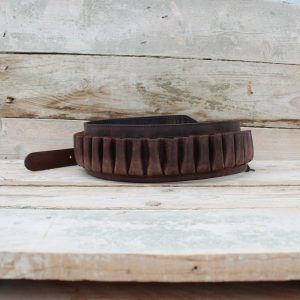
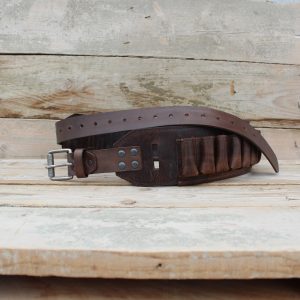
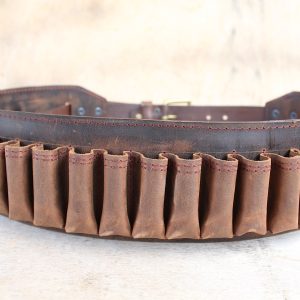
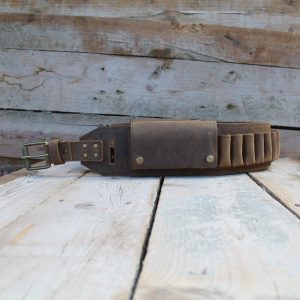
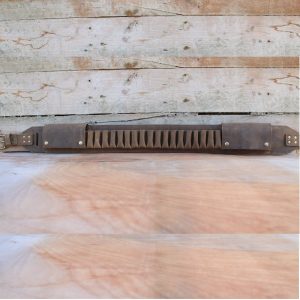
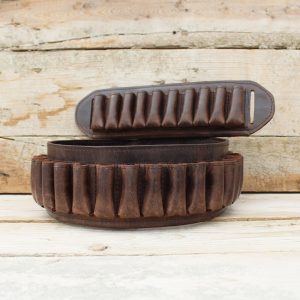
For hunters who demand reliability without compromise, our collection of full-grain leather shotgun shell belts is crafted to perform season after season. Each belt is handmade with precision-sized loops for 12GA, 16GA, 20GA, and 28GA shells, reinforced stitching, and durable hardware designed for real field use.
Balanced weight distribution, secure shell retention, and clean access under pressure make these belts a trusted part of a serious hunting setup.
Explore the complete collection below and choose the belt built for your next season in the field.
12 Gauge Leather Cartridge Belt – Handmade Crazy Horse Leather – Custom 12GA • 16GA • 20GA
Original price was: $262.$192Current price is: $192.9.3×62 Cartridge Belt Slide – Handmade Crazy Horse Leather with Flap Closure
Original price was: $100.$80Current price is: $80.Black Leather Cartridge Belt – Handmade for 12GA • 16GA • 20GA
Original price was: $262.$191Current price is: $191.Brown Crazy Horse Leather Cartridge Belt– 12GA/16GA/20GA/28GA
Original price was: $260.$193Current price is: $193.Custom .30-06 Leather Hunting Set – Cartridge Slide & Belt
Original price was: $146.$145Current price is: $145.Custom Leather Cartridge Belt – Handmade Crazy Horse | 12GA, 16GA & 20GA
Original price was: $310.$210Current price is: $210.Custom Leather Cartridge Belt Slide
Original price was: $150.$80Current price is: $80.Dual-Flap Leather Cartridge Belt – Handmade for 12GA • 16GA • 20GA
Original price was: $265.$195Current price is: $195.Flap-Closure Leather Cartridge Belt – 12GA • 16GA • 20GA
Original price was: $420.$300Current price is: $300.Handmade .308 Winchester Leather Cartridge Belt Slide
Original price was: $140.$95Current price is: $95.Handmade Crazy Horse Leather Cartridge Belt & Shoulder Bag Set | 12GA • 16GA • 20GA • 28GA
Original price was: $420.$299Current price is: $299.Handmade Leather Cartridge Belt & Wallet Set – 12GA/16GA/20GA
Original price was: $380.$290Current price is: $290.Handmade Leather Cartridge Belt Slide
Original price was: $120.$70Current price is: $70.Heritage Leather Cartridge Belt – Handmade for 12GA • 16GA • 20GA
Original price was: $270.$191Current price is: $191.Hybrid Leather Cartridge Belt – 12GA • 16GA • 20GA
Original price was: $400.$280Current price is: $280.Leather Cartridge Belt & Cartridge Belt Slide Set – Handmade for 12GA • 16GA • 20GA
Original price was: $300.$240Current price is: $240.Leather Cartridge Belt & Matching Slide Set
Original price was: $390.$290Current price is: $290.Leather Cartridge Belt, Cartridge Belt Slide & Wallet Set – Handmade for 12GA • 16GA • 20GA
Original price was: $360.$290Current price is: $290.Matching Set of 2 Leather Cartridge Belt Slides
Original price was: $200.$140Current price is: $140.Personalised Crazy Horse Leather Cartridge Belt | 12GA • 16GA • 20GA
Original price was: $290.$190Current price is: $190.Premium Leather Cartridge Belt – 12GA • 16GA • 20GA
Original price was: $450.$260Current price is: $260.