Goose hunting is not forgiving.
You are sitting in layout blinds before sunrise. Frost clings to the decoys. The wind cuts across open fields. Gloves stay on. Movement is minimal. When birds commit, you have seconds — not minutes — to reload cleanly and efficiently.
In these conditions, your gear either works or it fails.
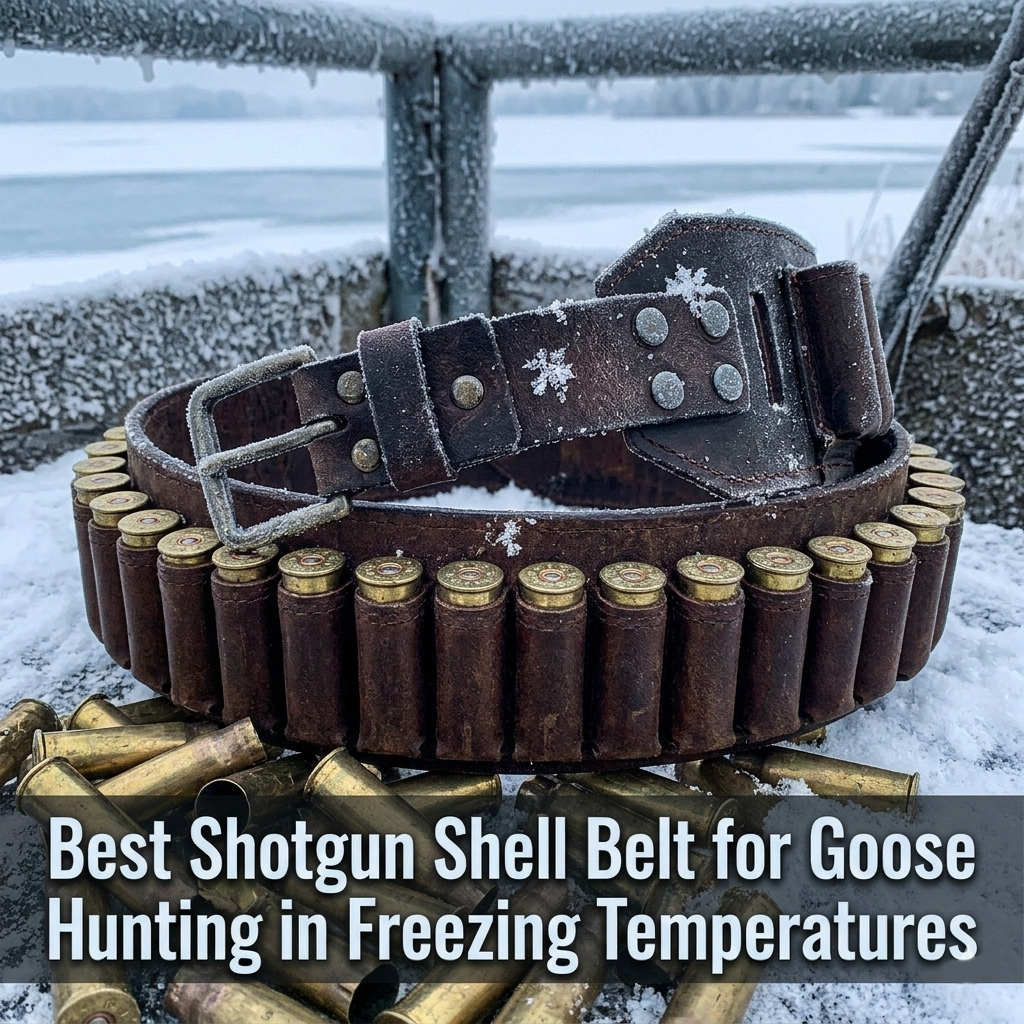
One overlooked but critical piece of equipment is your shotgun shell belt. In freezing temperatures, the wrong belt becomes stiff, unstable, and unreliable. The right belt remains structured, accessible, and dependable throughout the hunt.
This guide explains what separates an average shell belt from one built specifically for serious goose hunters in cold-weather conditions.
Complete Goose Hunting Gear Guide
Why Freezing Temperatures Change Everything
Cold weather affects materials in predictable ways:
- Nylon stiffens and loses flexibility
- Elastic shell loops weaken or overstretch
- Plastic hardware becomes brittle
- Moisture freezes into fabric fibers
When temperatures drop below freezing, many mass-produced ammo belts become uncomfortable and unstable. Shells shift. The belt twists under heavy magnum loads. Drawing a shell with gloves becomes awkward.
Goose hunting typically involves:
- 12GA high-brass or magnum loads
- Larger shot sizes
- Longer sits in blinds or layout positions
- Exposure to snow, mud, and freezing moisture
A belt must handle weight, moisture, and temperature stress without losing shape.
Why Full-Grain Leather Performs Better in the Cold
High-quality full-grain leather behaves differently than synthetic materials.
Instead of becoming brittle, properly conditioned leather maintains structure while staying flexible enough for movement. It does not collapse under load. It does not fray. It does not permanently deform after exposure to moisture.
When reinforced and stitched correctly, leather shell loops maintain consistent tension around 12GA, 16GA, 20GA, and even 28GA shells. That consistency matters when reloading with gloves in freezing wind.
A structured leather belt also distributes the weight of heavy goose loads evenly across the hips. This reduces fatigue during long sits and long walks back to the truck.
Heavy Goose Loads Require Structural Support
Goose hunters often carry:
- 3-inch or 3.5-inch 12GA shells
- Steel or heavier non-toxic loads
- 15–25 rounds on-belt
That is significant weight.
If the belt backing is thin or soft, it folds outward. When it folds, shells tilt. When shells tilt, reload speed suffers.
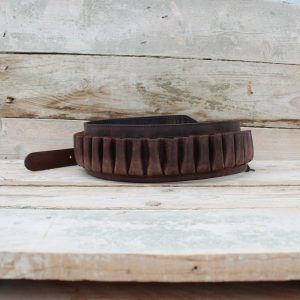
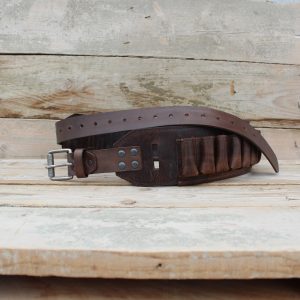
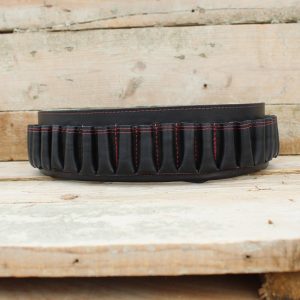
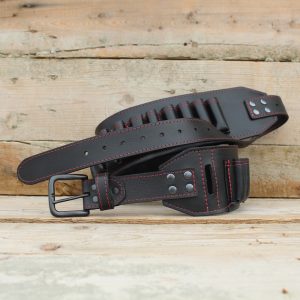
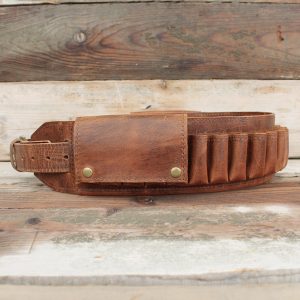
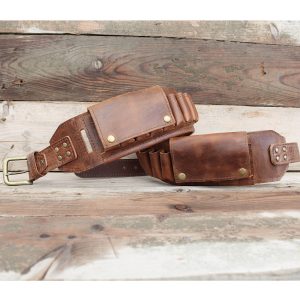
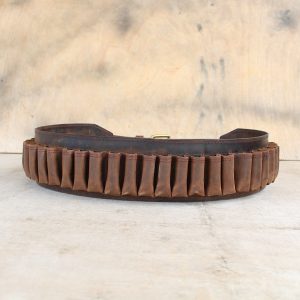
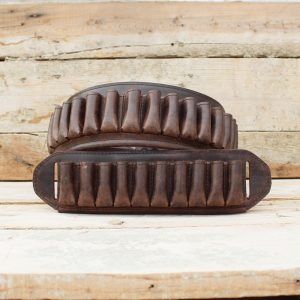
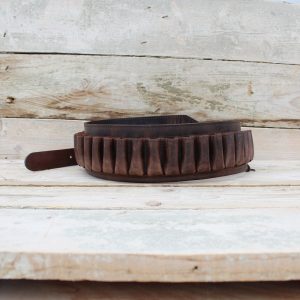
A properly built leather shotgun shell belt features:
- Thick full-grain hide
- Reinforced stitching at stress points
- Precision-sized loops for each gauge
- Solid metal hardware
- Adjustable sizing for layered winter clothing
This structural integrity prevents sagging — especially when worn over insulated jackets and waders.
Gloves, Speed, and Accessibility
Goose hunting rarely allows bare hands.
Cold fingers reduce dexterity. Gloves reduce grip precision. In that moment when a flock swings back, fumbling for a shell is unacceptable.
A well-constructed leather belt provides:
- Firm shell retention
- Easy forward extraction
- No elastic collapse
- No twisting under tension
Because leather loops are individually stitched and tensioned, they maintain consistent grip even after years of use.
This becomes especially important during fast follow-up shots in cold weather conditions.
Snow, Moisture, and Durability
Goose fields are rarely dry.
You kneel in snow. You brush against frozen grass. You shift in wet layout blinds.
Nylon absorbs moisture into its fibers. Over time, that leads to odor retention, fiber breakdown, and weakened stitching.
Full-grain leather, when properly maintained, resists deep moisture penetration. Surface moisture can be wiped clean. Conditioning protects flexibility. Reinforced stitching prevents seam failure.
For hunters who spend entire seasons in harsh environments, durability is not optional.
Belt Positioning with Waders and Heavy Layers
Cold-weather goose setups often include:
- Chest waders
- Insulated bibs
- Heavy outer shells
- Base layers
A quality shotgun shell belt should sit securely over outer layers without riding upward or digging into the waist.
Look for:
- Adjustable sizing range
- Solid buckle hardware
- Proper belt width for weight distribution
- Even loop spacing
When positioned correctly, the belt remains accessible while seated in layout blinds or pit blinds.
Gauge Considerations for Goose Hunting
While 12GA remains dominant for goose hunting, many hunters successfully use:
- 16GA for balanced recoil and performance
- 20GA for experienced shooters who prioritize mobility
- 28GA in specialized setups
A high-quality belt must be gauge-specific. Loop diameter must match shell casing precisely to avoid:
- Overly tight extraction
- Loose retention
- Shell deformation
Handmade belts sized specifically for 12GA, 16GA, 20GA, or 28GA provide a noticeable improvement in reliability compared to universal elastic carriers.
Longevity in Cold-Weather Hunts
Goose seasons can stretch across months.
Frequent exposure to frost, field grit, and moisture accelerates wear on low-quality gear. A well-made leather shotgun shell belt improves with time. The leather forms naturally to the hunter’s shape while maintaining load-bearing strength.
With basic conditioning and cleaning, a full-grain belt can last decades — not just seasons.
That reliability becomes especially important for hunters who travel for late-season geese or participate in annual traditions.
Why Serious Goose Hunters Invest in Leather
In cold conditions, performance differences become obvious.
Leather belts provide:
- Structural stability under heavy loads
- Reliable shell retention
- Comfortable weight distribution
- Durability in wet and freezing conditions
- Long-term value
When conditions are harsh, dependable gear reduces distractions. That focus often makes the difference between a missed opportunity and a clean harvest.
Explore Our Premium Shotgun Shell Belts for Goose Hunting
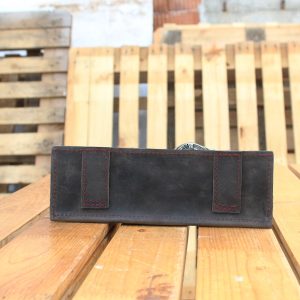
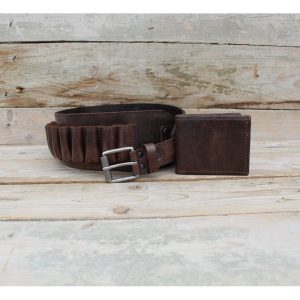
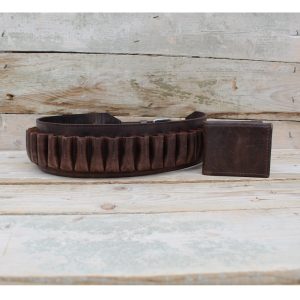
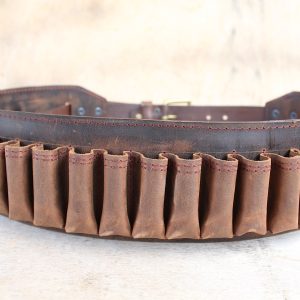
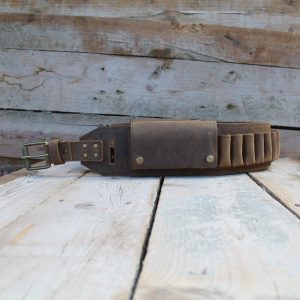
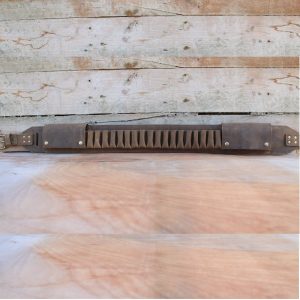
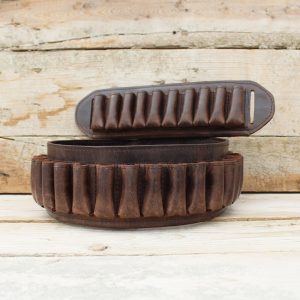
For hunters who demand reliability in freezing waterfowl conditions, we craft full-grain leather shotgun shell belts built specifically for 12GA, 16GA, 20GA, and 28GA. Each belt is handmade with reinforced stitching, precision-sized shell loops, and durable hardware designed for cold-weather performance.
Built for long sits, heavy loads, and demanding goose seasons, these belts deliver structure, balance, and dependable access when it matters most.
Explore the complete collection below and choose the belt built for your next cold-weather hunt.
12 Gauge Leather Cartridge Belt – Handmade Crazy Horse Leather – Custom 12GA • 16GA • 20GA
Original price was: $262.$192Current price is: $192.9.3×62 Cartridge Belt Slide – Handmade Crazy Horse Leather with Flap Closure
Original price was: $100.$80Current price is: $80.Black Leather Cartridge Belt – Handmade for 12GA • 16GA • 20GA
Original price was: $262.$191Current price is: $191.Brown Crazy Horse Leather Cartridge Belt– 12GA/16GA/20GA/28GA
Original price was: $260.$193Current price is: $193.Custom .30-06 Leather Hunting Set – Cartridge Slide & Belt
Original price was: $146.$145Current price is: $145.Custom Leather Cartridge Belt – Handmade Crazy Horse | 12GA, 16GA & 20GA
Original price was: $310.$210Current price is: $210.Custom Leather Cartridge Belt Slide
Original price was: $150.$80Current price is: $80.Dual-Flap Leather Cartridge Belt – Handmade for 12GA • 16GA • 20GA
Original price was: $265.$195Current price is: $195.Flap-Closure Leather Cartridge Belt – 12GA • 16GA • 20GA
Original price was: $420.$300Current price is: $300.Handmade .308 Winchester Leather Cartridge Belt Slide
Original price was: $140.$95Current price is: $95.Handmade Crazy Horse Leather Cartridge Belt & Shoulder Bag Set | 12GA • 16GA • 20GA • 28GA
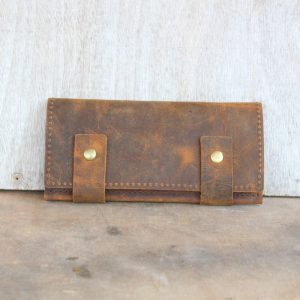
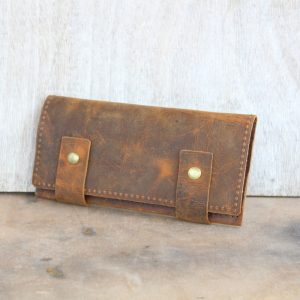
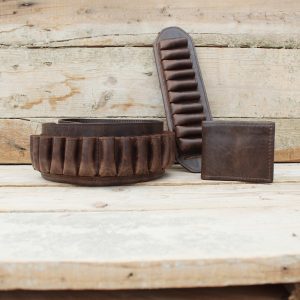
Original price was: $420.$299Current price is: $299.Handmade Leather Cartridge Belt & Wallet Set – 12GA/16GA/20GA
Original price was: $380.$290Current price is: $290.Handmade Leather Cartridge Belt Slide
Original price was: $120.$70Current price is: $70.Heritage Leather Cartridge Belt – Handmade for 12GA • 16GA • 20GA
Original price was: $270.$191Current price is: $191.Hybrid Leather Cartridge Belt – 12GA • 16GA • 20GA
Original price was: $400.$280Current price is: $280.Leather Cartridge Belt & Cartridge Belt Slide Set – Handmade for 12GA • 16GA • 20GA
Original price was: $300.$240Current price is: $240.Leather Cartridge Belt & Matching Slide Set
Original price was: $390.$290Current price is: $290.Leather Cartridge Belt, Cartridge Belt Slide & Wallet Set – Handmade for 12GA • 16GA • 20GA
Original price was: $360.$290Current price is: $290.Matching Set of 2 Leather Cartridge Belt Slides
Original price was: $200.$140Current price is: $140.Personalised Crazy Horse Leather Cartridge Belt | 12GA • 16GA • 20GA
Original price was: $290.$190Current price is: $190.Premium Leather Cartridge Belt – 12GA • 16GA • 20GA
Original price was: $450.$260Current price is: $260.