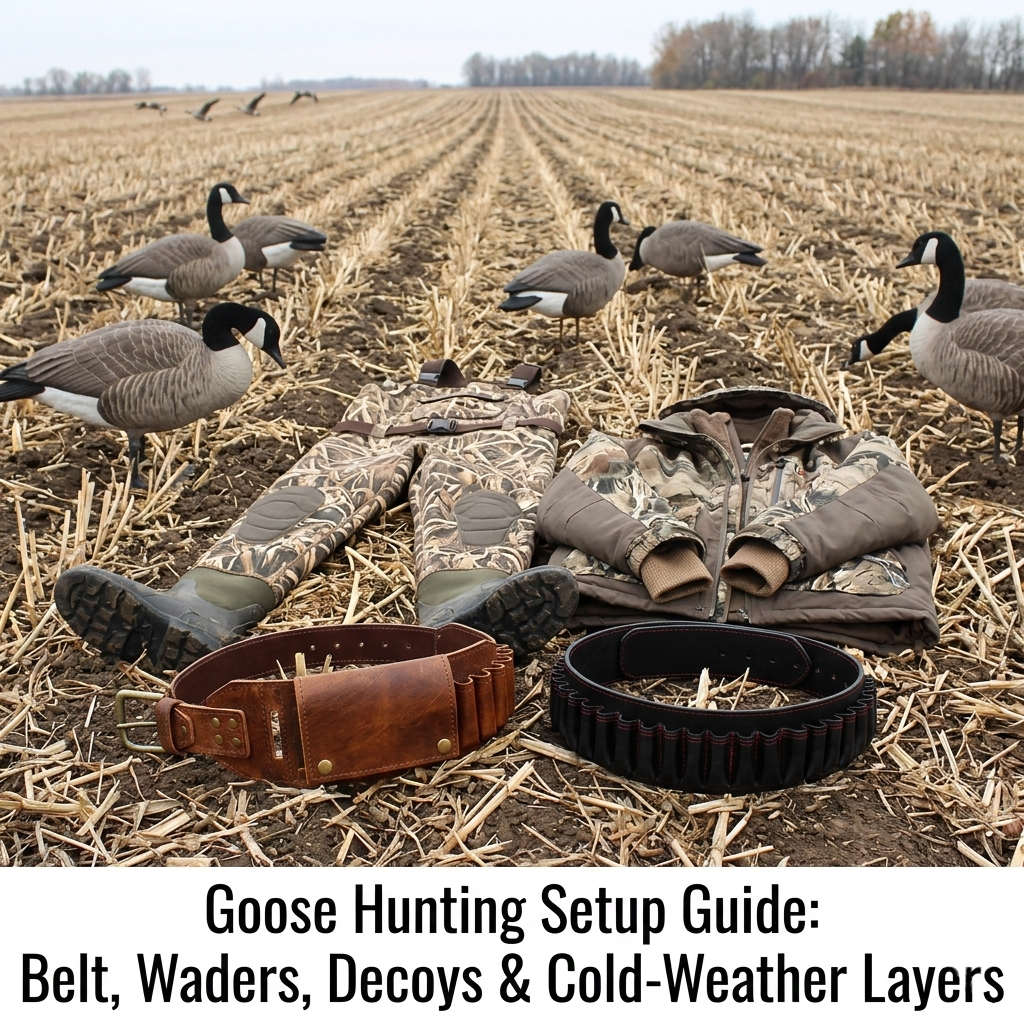
Successful goose hunting is rarely about a single piece of equipment.
It is about system balance.
Every element — from your shotgun shell belt to your waders and outer layers — must work together without restricting movement or slowing response time. When birds commit, you do not adjust gear. You react.
Goose hunting often involves:
- Freezing temperatures
- Wind exposure in open fields
- Snow, frost, or wet ground
- Extended sitting in layout or pit blinds
- Heavy 12GA loads
Your gear must be structured for those realities.
Complete Goose Hunting Gear Guide.
This guide explains how to build a balanced setup for cold-weather goose hunts.
The Foundation: Choosing the Right Shotgun Shell Belt
Your belt sits at the center of your load-bearing system.
A properly built shotgun shell belt should:
- Distribute weight evenly
- Remain stable over insulated clothing
- Provide easy shell access with gloves
- Maintain structure under heavy loads
In cold-weather goose hunts, shell belts are worn over:
- Thermal base layers
- Insulated bibs
- Heavy jackets
This increases bulk around the waist. A belt must have:
- Adequate width for weight distribution
- Reinforced stitching
- Durable metal hardware
- Adjustable sizing range
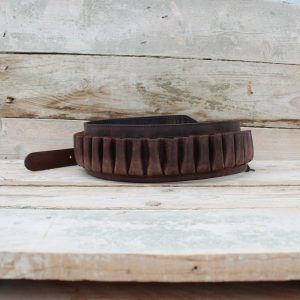
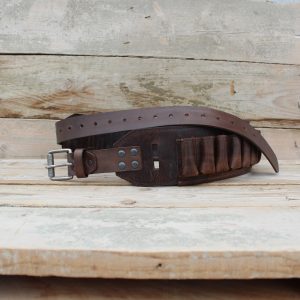
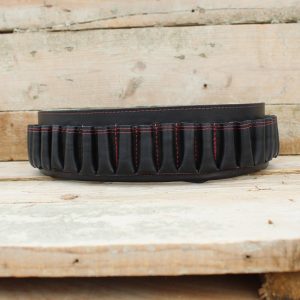
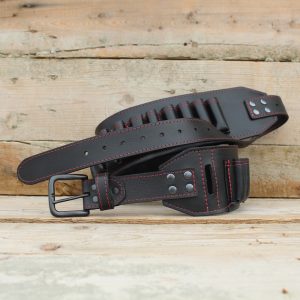
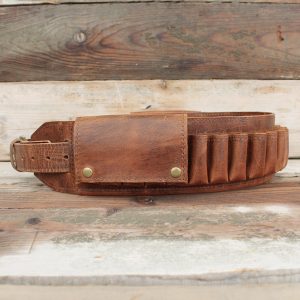
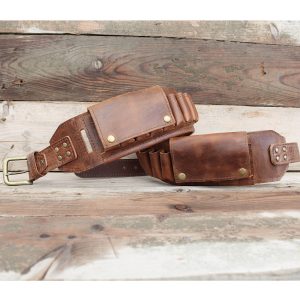
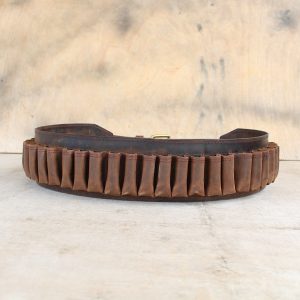
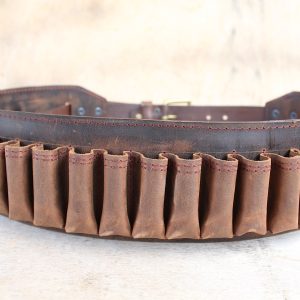
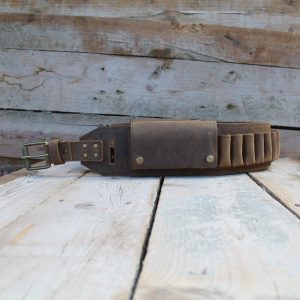
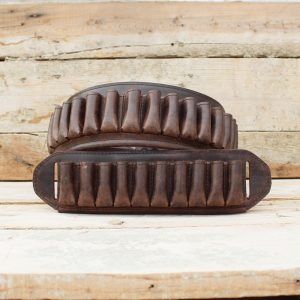
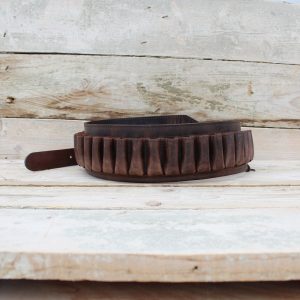
Full-grain leather backing prevents sagging and twisting — especially when carrying 15–25 rounds of 12GA shells.
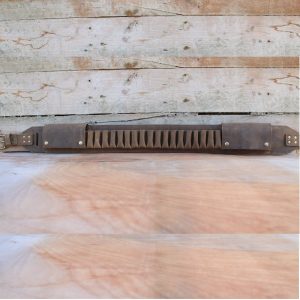
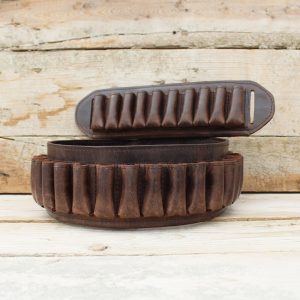
Loop precision is equally important. Gauge-specific sizing for 12GA, 16GA, 20GA, or 28GA ensures shells remain secure yet accessible.
Without structural integrity at the belt level, the rest of the system becomes inefficient.
Integrating the Belt with Waders
Many goose hunts involve standing water, snowmelt fields, or wet agricultural terrain.
Hunters frequently wear:
- Chest waders
- Insulated bibs
- Waterproof outer shells
Belt positioning matters.
The shell belt should sit:
- Slightly above the waistline of waders
- Tight enough to prevent movement
- Loose enough to allow breathing and layering
A common mistake is wearing the belt too low. This leads to shell obstruction when seated in layout blinds.
Proper placement allows:
- Natural hand access
- Stable positioning while kneeling
- No interference with wader straps
Shotgun Shell Belts for Waterfowl & Duck Hunters
Cold-Weather Layering Strategy
Layering affects mobility and belt performance.
A structured cold-weather system typically includes:
- Moisture-wicking base layer
- Insulating mid-layer
- Windproof outer shell
- Waterproof or snow-resistant outer garment
The belt must accommodate the full bulk of this layering without digging into the waist or shifting during movement.
Heavy loads from 12GA shells require a belt with:
- Thick leather backing
- Even loop spacing
- Strong buckle hardware
When standing quickly from a layout blind, the belt should not rotate or slide.
This stability reduces unnecessary movement — an important factor when geese are approaching.
Decoy Spreads and Mobility
Goose hunting often involves setting large decoy spreads.
This requires:
- Walking across uneven terrain
- Carrying decoy bags
- Bending repeatedly
A poorly balanced belt can create discomfort during setup.
A properly fitted leather shotgun shell belt distributes shell weight across the hips rather than concentrating pressure at the lower back.
For mobile field hunters, especially those adjusting spreads mid-hunt, balanced weight improves endurance.
Layout Blinds and Accessibility
Layout blinds are common in goose hunting.
When lying back:
- Shells must remain secure
- Loops must not collapse
- Belt must not dig into the spine
Nylon belts with soft backing can bunch or twist when seated or reclined.
A structured leather belt maintains flat positioning across the waistline. This prevents shell displacement and maintains consistent orientation.
When birds approach and you rise quickly, shells remain exactly where expected.
Gloves and Reload Efficiency
Cold-weather hunts require gloves.
Glove use reduces tactile precision. Shell loops must offer:
- Firm retention
- Consistent spacing
- Clear access points
Precision-stitched leather loops provide reliable tension even after repeated use. They do not overstretch like elastic systems.
When follow-up shots are required, predictable shell placement saves time.
Gauge Considerations in a Full Setup
12GA remains the dominant choice for goose hunting due to heavier loads and extended range capability.
However:
- 20GA offers reduced weight and recoil
- 16GA provides balanced performance
- 28GA can be used in specialized close-range setups
Regardless of gauge, the belt must be designed specifically for shell diameter.
Universal elastic belts often compromise retention when switching gauges. A dedicated gauge-specific leather belt ensures proper shell alignment and secure carry.
Weight Management for Long Hunts
Late-season goose hunts often begin before sunrise and extend for hours.
Extended sitting, wind exposure, and limited movement place stress on posture.
A properly designed shell belt:
- Prevents load concentration
- Reduces hip fatigue
- Minimizes lower back strain
This contributes to overall comfort — which directly affects shooting focus and reaction time.
Equipment that causes distraction becomes a liability.
Weather Resistance and Field Durability
Goose hunts frequently involve:
- Snow contact
- Frost accumulation
- Mud and agricultural debris
Full-grain leather, when maintained, resists surface moisture and retains structure after exposure.
Reinforced stitching prevents stress-point failure under heavy loads.
Long-term durability is especially valuable for hunters who participate in annual traditions or travel for seasonal migrations.
Building a Complete Goose Hunting System
An effective goose hunting setup includes:
- Reliable shotgun matched to gauge
- Quality non-toxic ammunition
- Structured shell belt
- Insulated layering system
- Durable waders
- Well-planned decoy spread
- Effective calling strategy
Each component must function without interfering with another.
The shell belt serves as a central access point within this system. It should support, not complicate, performance.
Explore Premium Shotgun Shell Belts for Cold-Weather Goose Hunting
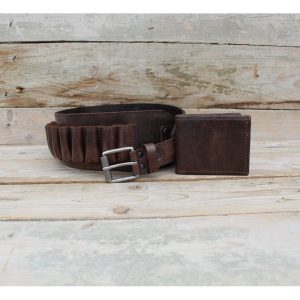
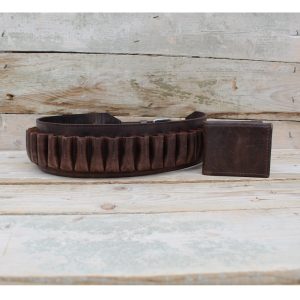
We craft full-grain leather shotgun shell belts specifically designed for demanding waterfowl conditions. Available in 12GA, 16GA, 20GA, and 28GA configurations, each belt features reinforced stitching, precision-sized shell loops, and durable hardware built for heavy loads and freezing environments.
Designed to integrate seamlessly with waders, insulated layers, and layout blind setups, these belts provide structure, balance, and reliable shell access when timing matters most.
Explore the complete collection to complete your cold-weather goose hunting system.
12 Gauge Leather Cartridge Belt – Handmade Crazy Horse Leather – Custom 12GA • 16GA • 20GA
Original price was: $262.$192Current price is: $192.9.3×62 Cartridge Belt Slide – Handmade Crazy Horse Leather with Flap Closure
Original price was: $100.$80Current price is: $80.Black Leather Cartridge Belt – Handmade for 12GA • 16GA • 20GA
Original price was: $262.$191Current price is: $191.Brown Crazy Horse Leather Cartridge Belt– 12GA/16GA/20GA/28GA
Original price was: $260.$193Current price is: $193.Custom .30-06 Leather Hunting Set – Cartridge Slide & Belt
Original price was: $146.$145Current price is: $145.Custom Leather Cartridge Belt – Handmade Crazy Horse | 12GA, 16GA & 20GA
Original price was: $310.$210Current price is: $210.Custom Leather Cartridge Belt Slide
Original price was: $150.$80Current price is: $80.Dual-Flap Leather Cartridge Belt – Handmade for 12GA • 16GA • 20GA
Original price was: $265.$195Current price is: $195.Flap-Closure Leather Cartridge Belt – 12GA • 16GA • 20GA
Original price was: $420.$300Current price is: $300.Handmade .308 Winchester Leather Cartridge Belt Slide
Original price was: $140.$95Current price is: $95.Handmade Crazy Horse Leather Cartridge Belt & Shoulder Bag Set | 12GA • 16GA • 20GA • 28GA
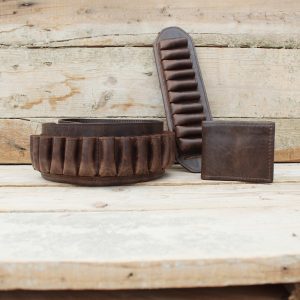
Original price was: $420.$299Current price is: $299.Handmade Leather Cartridge Belt & Wallet Set – 12GA/16GA/20GA
Original price was: $380.$290Current price is: $290.Handmade Leather Cartridge Belt Slide
Original price was: $120.$70Current price is: $70.Heritage Leather Cartridge Belt – Handmade for 12GA • 16GA • 20GA
Original price was: $270.$191Current price is: $191.Hybrid Leather Cartridge Belt – 12GA • 16GA • 20GA
Original price was: $400.$280Current price is: $280.Leather Cartridge Belt & Cartridge Belt Slide Set – Handmade for 12GA • 16GA • 20GA
Original price was: $300.$240Current price is: $240.Leather Cartridge Belt & Matching Slide Set
Original price was: $390.$290Current price is: $290.Leather Cartridge Belt, Cartridge Belt Slide & Wallet Set – Handmade for 12GA • 16GA • 20GA
Original price was: $360.$290Current price is: $290.Matching Set of 2 Leather Cartridge Belt Slides
Original price was: $200.$140Current price is: $140.Personalised Crazy Horse Leather Cartridge Belt | 12GA • 16GA • 20GA
Original price was: $290.$190Current price is: $190.Premium Leather Cartridge Belt – 12GA • 16GA • 20GA
Original price was: $450.$260Current price is: $260.