In early-season fields, nylon may appear sufficient.
But late-season goose hunting reveals weaknesses in gear quickly.
Freezing wind, wet ground, layout blinds, heavy 12GA loads, long sits — these conditions expose the difference between materials built for casual use and materials built for serious hunting.
Shell belts are no exception.
Many new hunters begin with nylon ammunition belts because they are lightweight and widely available. Over time, however, experienced goose hunters often transition to full-grain leather.
The reasons are practical, not aesthetic.
Complete Goose Hunting Gear Guide
Structural Stability Under Heavy Loads
Goose hunting typically requires:
- 3-inch or 3.5-inch 12GA shells
- Larger steel shot sizes
- Carrying 15–25 rounds
This creates significant belt weight.
Nylon belts often rely on:
- Elastic shell loops
- Thin synthetic backing
- Plastic hardware
When loaded heavily, nylon tends to:
- Sag outward
- Twist at the waist
- Lose loop tension over time
Leather behaves differently.
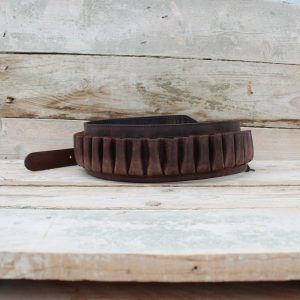
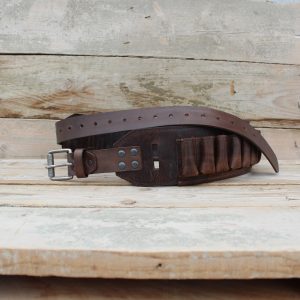
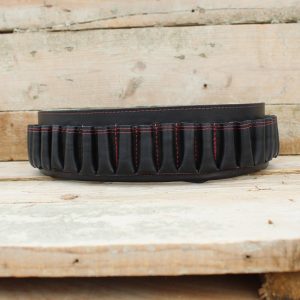
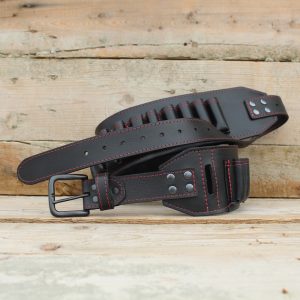
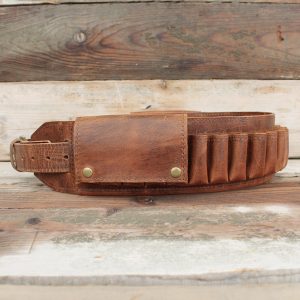
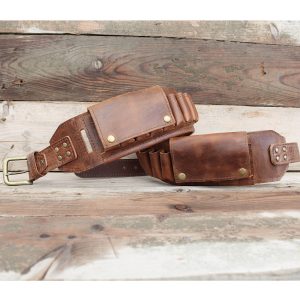
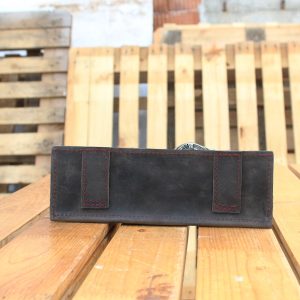
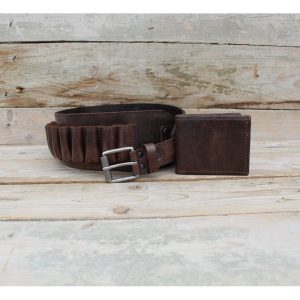
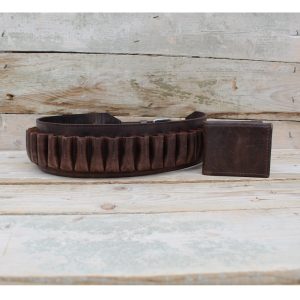
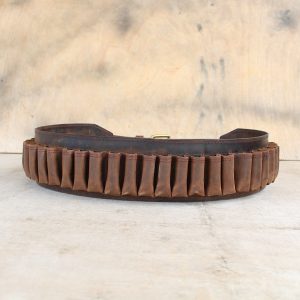
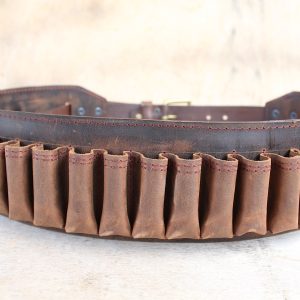
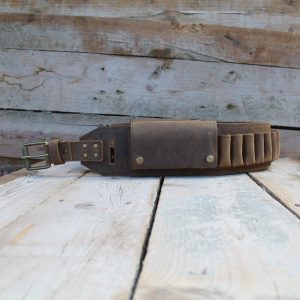
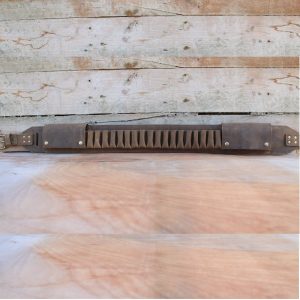
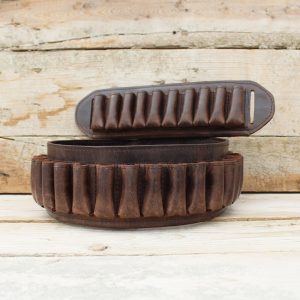
A properly constructed full-grain leather shotgun shell belt features:
- Thick hide backing
- Individually stitched shell loops
- Reinforced stress points
- Solid metal hardware
This structure prevents collapse under weight. Even when fully loaded, the belt remains balanced and stable — especially important when worn over insulated jackets or waders.
Cold Weather Performance
Temperature has a measurable effect on materials.
In freezing conditions:
- Nylon stiffens
- Elastic contracts and weakens
- Plastic components become brittle
Goose hunters frequently operate in temperatures below freezing, particularly during late-season migrations.
Full-grain leather, when properly conditioned, maintains flexibility while retaining structural integrity. It does not become rigid in the same way synthetic materials can.
This consistency matters when:
- Drawing shells with gloves
- Adjusting position in layout blinds
- Standing quickly during a calling sequence
Cold-weather reliability is one of the primary reasons experienced hunters transition away from nylon systems.
Shell Retention and Reload Efficiency
Elastic loops stretch.
Repeated insertion and removal of heavy shells gradually reduces tension. Over time, shells may sit loosely or tilt outward.
Loose retention leads to:
- Slower reloads
- Increased fumbling with gloves
- Inconsistent shell orientation
Leather loops, when sized specifically for 12GA, 16GA, 20GA, or 28GA, maintain consistent grip. The tension does not rely on elastic compression but on precise sizing and durable stitching.
This allows:
- Clean forward extraction
- Stable positioning
- Faster follow-up shots
In goose hunting, where opportunities can develop rapidly, reliable reload access becomes critical.
Longevity and Wear Over Seasons
Nylon belts tend to show wear at stress points:
- Frayed edges
- Stitch separation
- Elastic fatigue
- Hardware corrosion
They are often replaced every few seasons.
Full-grain leather ages differently.
With use, leather develops natural character without sacrificing structural strength. With basic maintenance — cleaning and conditioning — a high-quality leather shotgun shell belt can last decades.
For hunters who participate in annual traditions, club hunts, or generational outings, long-term durability becomes part of the appeal.
Weight Distribution During Long Sits
Goose hunting often involves:
- Extended time in layout blinds
- Minimal movement
- Sudden standing sequences
A sagging belt creates discomfort during long sits. Twisting or uneven weight distribution becomes noticeable when seated.
Thick leather backing distributes weight evenly across the hips. It maintains position when seated and remains secure when standing quickly.
This is particularly important when wearing:
- Heavy insulated jackets
- Bibs
- Chest waders
For a broader look at how shell belts integrate into full waterfowl setups, link here to your Waterfowl Hunting pillar.
Moisture Exposure and Field Conditions
Goose fields are rarely dry.
Hunters encounter:
- Snow
- Mud
- Frost
- Wet vegetation
Nylon absorbs moisture into fibers. Over time, this can lead to odor retention and material breakdown.
Quality leather, when properly treated, resists surface moisture and dries naturally. Reinforced stitching maintains integrity even after repeated exposure.
Hunters who spend entire seasons in wet agricultural fields often prioritize materials that maintain structural strength despite environmental stress.
Professional Appearance and Club Identity
Goose hunting frequently involves:
- Hunting clubs
- Guided hunts
- Multi-generation traditions
- Corporate outings
Leather belts offer opportunities for personalization through engraved initials, names, or club insignia.
This level of customization is rarely possible with nylon equipment.
For guides and outfitters, coordinated leather gear presents a professional appearance that aligns with tradition and craftsmanship.
Long-Term Value Consideration
Initial cost is often cited as the advantage of nylon.
However, when accounting for:
- Replacement frequency
- Performance degradation
- Structural fatigue
The long-term value of full-grain leather becomes clear.
A single well-made leather shotgun shell belt can outlast multiple synthetic alternatives, especially under demanding goose hunting conditions.
When Nylon May Still Be Suitable
Nylon may be appropriate for:
- Occasional early-season hunts
- Lightweight training setups
- Temporary or backup gear
However, for hunters consistently facing cold, moisture, and heavy loads, leather offers measurable performance advantages.
Why Experienced Goose Hunters Make the Switch
Over time, field experience shapes equipment decisions.
Hunters who prioritize:
- Stability
- Cold-weather reliability
- Consistent shell retention
- Long-term durability
Often transition to full-grain leather systems.
The decision is based on performance, not preference alone.
Explore Premium Full-Grain Leather Shotgun Shell Belts
For goose hunters who demand stability in freezing conditions, we craft full-grain leather shotgun shell belts designed for 12GA, 16GA, 20GA, and 28GA configurations.
Each belt is handmade with reinforced stitching, precision-sized shell loops, and durable metal hardware to withstand heavy loads and cold-weather environments.
Designed for long sits, harsh conditions, and consistent field performance, these belts provide the structural integrity serious goose hunters rely on season after season.
Explore the full collection to find the configuration built for your next hunt.
12 Gauge Leather Cartridge Belt – Handmade Crazy Horse Leather – Custom 12GA • 16GA • 20GA
Original price was: $262.$192Current price is: $192.9.3×62 Cartridge Belt Slide – Handmade Crazy Horse Leather with Flap Closure
Original price was: $100.$80Current price is: $80.Black Leather Cartridge Belt – Handmade for 12GA • 16GA • 20GA
Original price was: $262.$191Current price is: $191.Brown Crazy Horse Leather Cartridge Belt– 12GA/16GA/20GA/28GA
Original price was: $260.$193Current price is: $193.Custom .30-06 Leather Hunting Set – Cartridge Slide & Belt
Original price was: $146.$145Current price is: $145.Custom Leather Cartridge Belt – Handmade Crazy Horse | 12GA, 16GA & 20GA
Original price was: $310.$210Current price is: $210.Custom Leather Cartridge Belt Slide
Original price was: $150.$80Current price is: $80.Dual-Flap Leather Cartridge Belt – Handmade for 12GA • 16GA • 20GA
Original price was: $265.$195Current price is: $195.Flap-Closure Leather Cartridge Belt – 12GA • 16GA • 20GA
Original price was: $420.$300Current price is: $300.Handmade .308 Winchester Leather Cartridge Belt Slide
Original price was: $140.$95Current price is: $95.Handmade Crazy Horse Leather Cartridge Belt & Shoulder Bag Set | 12GA • 16GA • 20GA • 28GA
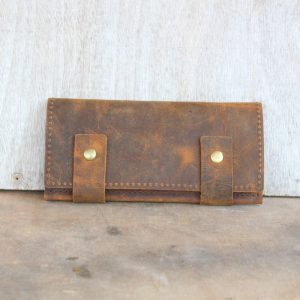
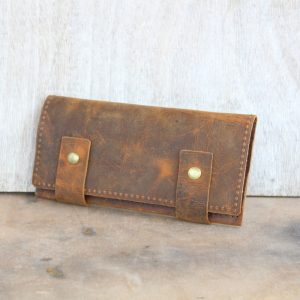
Original price was: $420.$299Current price is: $299.Handmade Leather Cartridge Belt & Wallet Set – 12GA/16GA/20GA
Original price was: $380.$290Current price is: $290.Handmade Leather Cartridge Belt Slide
Original price was: $120.$70Current price is: $70.Heritage Leather Cartridge Belt – Handmade for 12GA • 16GA • 20GA
Original price was: $270.$191Current price is: $191.Hybrid Leather Cartridge Belt – 12GA • 16GA • 20GA
Original price was: $400.$280Current price is: $280.Leather Cartridge Belt & Cartridge Belt Slide Set – Handmade for 12GA • 16GA • 20GA
Original price was: $300.$240Current price is: $240.Leather Cartridge Belt & Matching Slide Set
Original price was: $390.$290Current price is: $290.Leather Cartridge Belt, Cartridge Belt Slide & Wallet Set – Handmade for 12GA • 16GA • 20GA
Original price was: $360.$290Current price is: $290.Matching Set of 2 Leather Cartridge Belt Slides
Original price was: $200.$140Current price is: $140.Personalised Crazy Horse Leather Cartridge Belt | 12GA • 16GA • 20GA
Original price was: $290.$190Current price is: $190.Premium Leather Cartridge Belt – 12GA • 16GA • 20GA
Original price was: $450.$260Current price is: $260.