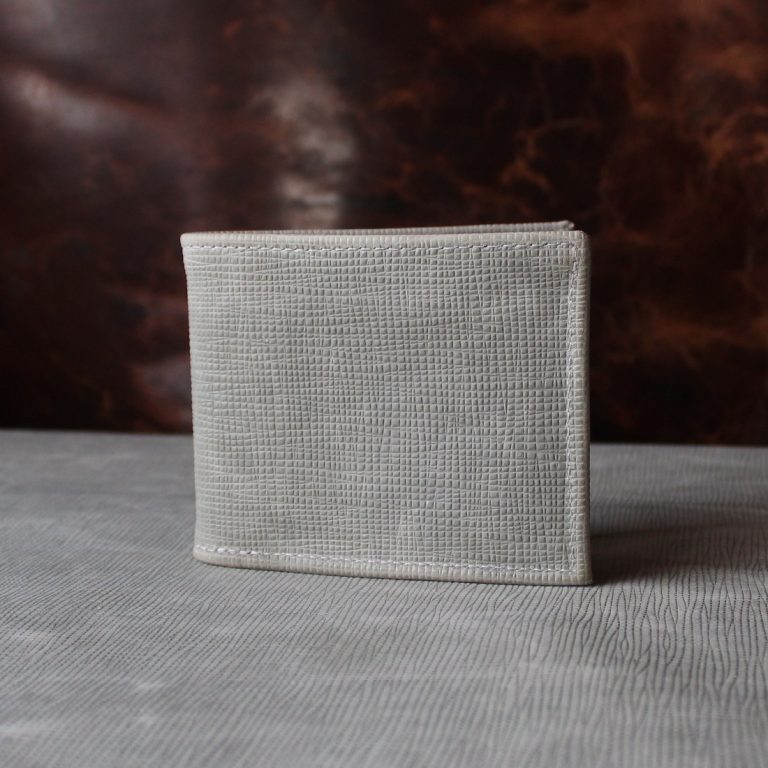
You’ve decided to invest in a quality wallet. It’s a smart move. But as you start looking, you’re hit with a wave of terms: Full-Grain, Top-Grain, Genuine, Corrected, Nappa, Pull-Up… It’s enough to make you just grab the cheapest option and call it a day.
Don’t. The type of leather is the single most important factor determining how your wallet will look, feel, and last. Choosing the right one is the difference between a wallet that becomes a worn-out mess in a year and one that becomes a trusted companion for life.
This guide cuts through the marketing jargon. We’ll break down the different types of leather in simple terms, so you can confidently choose the best leather for your wallet based on your style and needs.
The #1 Rule: It’s All About the Grain
First, understand that leather is made from animal hide, which has layers. The quality is determined by which layer is used.
Think of it like a piece of wood:
► The top layer, with the beautiful natural grain, is the strongest and most durable.
► The inner layers are softer and weaker.
The best leather for wallets comes from that top, strongest layer.
The Contenders: Breaking Down the Leather Grades
Here are the three main grades you’ll encounter, from best to worst.
1. Full-Grain Leather: The Undisputed Champion
► What it is: The highest quality leather available. It comes from the top layer of the hide, including the entire natural grain. It is not sanded or buffed to remove natural imperfections like scars or insect bites. This is a feature, not a flaw.
► Key Characteristic: It develops a patina. This is the magic word. Over time, the oils from your hands, exposure to light, and daily use cause the leather to darken and develop a rich, unique sheen. Your wallet tells the story of your life.
► Durability: Exceptional. Because the tight, fibrous grain is intact, it is the most durable and longest-lasting leather. It resists moisture and wear better than any other type.
► Feel: Starts off stiffer but breaks in to a buttery-soft feel that molds perfectly to your cards and body.
► Best for: The man who views his wallet as a “Buy It For Life” item. He appreciates character, authenticity, and unmatched durability.
Verdict: The best choice for a lifetime wallet.
2. Top-Grain Leather: The Popular All-Rounder
► What it is: This is also from the top layer of the hide, but the surface has been sanded or buffed to remove the natural imperfections. It is then typically finished with a coating or pigment to give it a uniform color and look.
► Key Characteristic: More supple out of the box. It has a cleaner, more consistent appearance than full-grain because the imperfections are removed.
► Durability: Very Good. It’s still a strong, high-quality leather. However, the sanding process makes it slightly thinner and less durable than full-grain over many decades.
► Feel: Softer and more pliable from day one.
► Best for: The man who wants a great balance of quality, durability, and a more refined, uniform look right away. It’s a fantastic, high-quality choice.
Verdict: A great balance of quality and immediate elegance.
3. Genuine Leather: The Misleading Term (Avoid for Wallets)
► What it is: This is where things get tricky. “Genuine Leather” is a technical term that simply means the product contains some real leather. However, it is not a quality grade. It almost always refers to the lower layers of the hide that have been ground up, bonded with glue, and stamped with an artificial grain pattern to look like top-grain leather. It’s often called “bonded leather.”
► Key Characteristic: Has a plastic-like, uniform look. It will not develop a patina. Instead, the plastic coating will eventually crack and peel.
► Durability: Poor. This is the leather you find on cheap, disposable wallets. It lacks the natural fiber structure needed for long-term strength.
► Feel: Can feel stiff and plasticky.
► Best for: Avoid for a wallet. It’s a false economy. You’ll be replacing it every year or two.
Verdict: Just say no.
Quick Comparison Table
| Feature | Full-Grain | Top-Grain | Genuine |
|---|---|---|---|
| Durability | ⭐⭐⭐⭐⭐ (Excellent) | ⭐⭐⭐⭐ (Very Good) | ⭐⭐ (Poor) |
| Aging | Develops a rich patina | Ages well, less patina | Cracks and peels |
| Look | Natural, unique markings | Uniform, refined | Artificial, plastic-like |
| Cost | Highest | Medium-High | Low |
| Best For | Heirlooms, BIFL | Quality & Style | Disposable Items |
Other Leather Types You Might See
► Suede: Made from the inner layer of the hide (the “flesh side”). It’s soft and stylish but not ideal for a wallet as it’s less durable and stains easily.
► Shell Cordovan: A rare and expensive leather from a horse’s rear end. Incredibly durable, develops a high-gloss patina, and is considered the pinnacle of wallet leather by enthusiasts. It’s a premium option beyond full-grain.
The Final Verdict: Which is BEST for You?
So, which leather is best for a men’s wallet? The answer depends on your priorities.
► Choose Full-Grain Leather if: You want the maximum durability and you love the idea of your wallet aging with character and becoming uniquely yours. You see it as a one-time purchase.
► Choose Top-Grain Leather if: You want a high-quality, durable wallet that looks elegant and refined from day one. You want a great balance of performance and immediate beauty.
The bottom line: For a wallet that is both an investment and a daily companion, focus on Full-Grain or High-Quality Top-Grain leather. Steer clear of anything vaguely labeled “Genuine Leather.”
By understanding these simple differences, you’re no longer just buying a wallet—you’re investing in a story. And that story should be written in quality leather.
Ready to choose your legacy? Explore our collection of wallets crafted from the world’s finest full-grain and top-grain leathers.
Black & Red Top-Grain Leather Wallet
Original price was: $112.$82Current price is: $82.Burgundy Croc-Embossed Leather Wallet
Original price was: $150.$80Current price is: $80.Classic Men’s Black Leather Wallet
Original price was: $130.$70Current price is: $70.Customized Men’s Handmade Leather Wallet
Original price was: $99.$65Current price is: $65.Distressed Tan Leather Bifold Wallet/Cardholder
Original price was: $99.$55Current price is: $55.Handmade Leather Wallet Without Coin Pocket
Original price was: $110.$70Current price is: $70.Handmade Skull Embossed Bifold Wallet
Original price was: $120.$85Current price is: $85.Large Men’s Wallet with Coin Pocket
Original price was: $140.$85Current price is: $85.Men’s Bifold Wallet with Elastic Band
Original price was: $110.$60Current price is: $60.Men’s Black Leather Bifold Wallet – Top Grain, Red Stitch Contrast
Original price was: $80.$44Current price is: $44.Men’s Black Leather Wallet – Personalized Engraved
Original price was: $130.$70Current price is: $70.Men’s Brown Leather Checkbook Wallet
Original price was: $130.$88Current price is: $88.Men’s Classic Small Folding Wallet
Original price was: $110.$62Current price is: $62.Men’s Colorful Leather Wallet
Original price was: $120.$69Current price is: $69.Men’s Dark Brown Leather Trifold Wallet
Original price was: $120.$70Current price is: $70.Men’s Handmade Brown Leather Wallet
Original price was: $125.$75Current price is: $75.Men’s Long Leather Wallet – Black Top-Grain
Original price was: $110.$90Current price is: $90.Men’s Luxury Black Leather Wallet
Original price was: $140.$90Current price is: $90.Men’s Slim Leather Wallet with ID Window
Original price was: $100.$60Current price is: $60.Men’s Trifold Leather Wallet with Snap Closure
Original price was: $120.$60Current price is: $60.