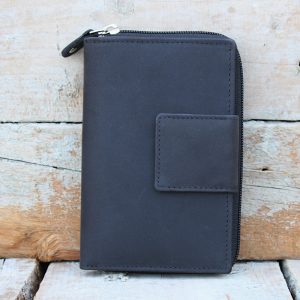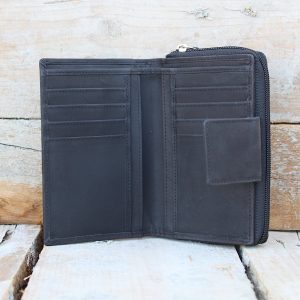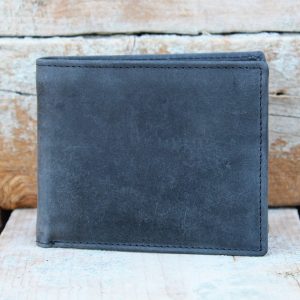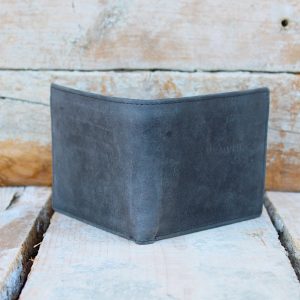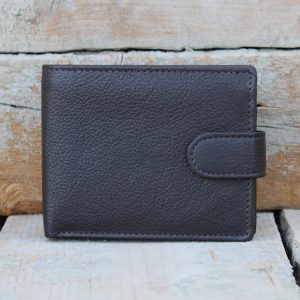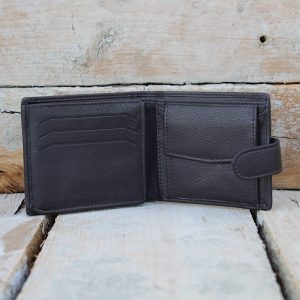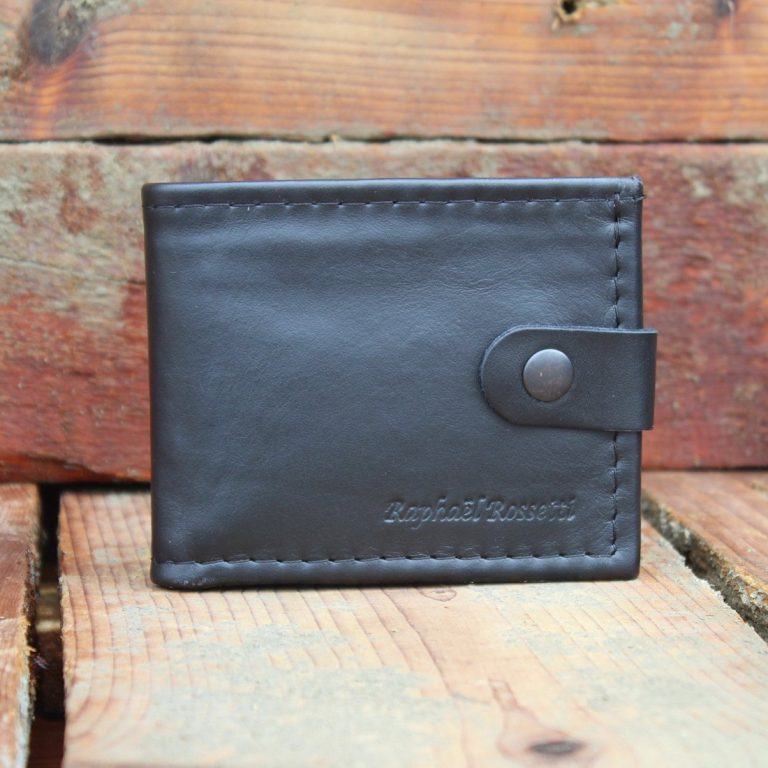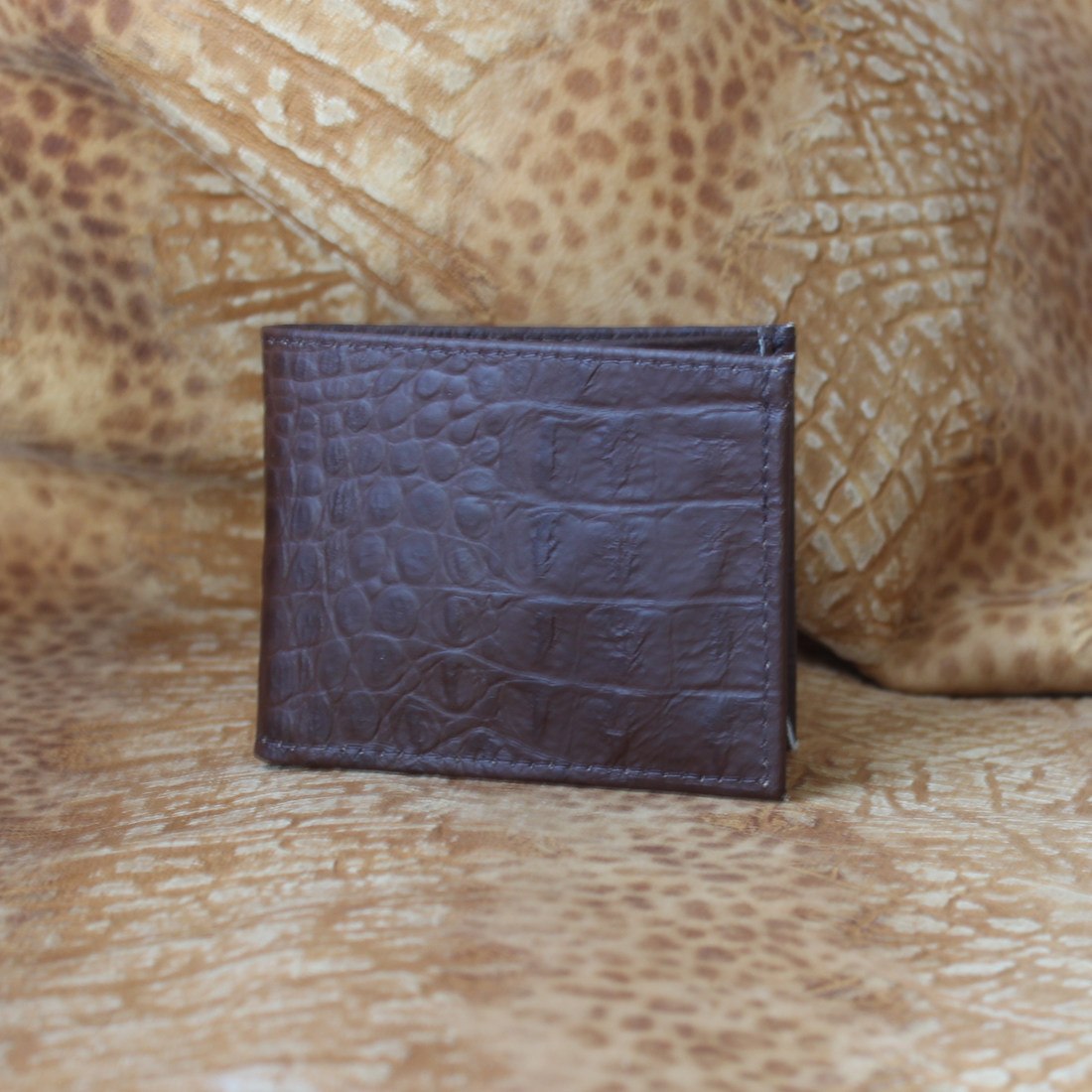
You’ve seen them: the beautiful, handcrafted leather wallet that feels like a dream but carries a price tag that makes you pause. Meanwhile, you can easily find a wallet at a department store for a fraction of the cost. So, what gives? Is the expensive one just a rip-off?
Far from it. The price difference between a mass-produced wallet and a quality handmade one isn’t about markup; it’s about value, materials, and a completely different philosophy of creation.
When you understand what goes into a truly well-made leather wallet, the question shifts from “Why is it so expensive?” to “How is the cheap one so cheap?”
Let’s pull back the curtain on the real cost of a leather wallet that lasts a lifetime.
1. The Raw Material: It All Starts with the Hide
This is the single biggest factor. Not all “leather” is created equal.
► Full-Grain Leather: This is the highest quality and most expensive. It comes from the top layer of the hide, complete with its natural grain and unique markings (like scars and wrinkles). It’s incredibly strong and durable, and it’s the only type that develops a rich patina—a beautiful sheen that gets better with age. This is what we use.
► Top-Grain Leather: The second-highest quality. The top layer is sanded to remove imperfections, making it more uniform and supple but slightly less durable than full-grain. It’s still a high-quality, expensive material.
► Genuine Leather: This is where the confusion lies. While it technically means “real leather,” the term is used for the lower layers of the hide that have been ground up, bonded with glue, and stamped with a fake grain. It’s weak, prone to cracking and peeling, and is the material used in most cheap wallets.
The Bottom Line: You are paying for the integrity of the material. A full-grain leather hide can cost 10-20 times more per square foot than the bonded leather used in a disposable wallet.
2. The Art of Craftsmanship: Paying for Time and Skill
A machine in a factory can spit out hundreds of wallets an hour. An artisan in a workshop might take several hours, or even a full day, to make a single wallet.
Here’s what you’re paying for in that time:
► Hand-Cutting: Each piece is meticulously cut by hand, ensuring the strongest parts of the hide are used for structural integrity.
► Hand-Stitching (Saddle Stitching): This is the gold standard. Using two needles and waxed thread, a craftsperson creates a stitch that is incredibly strong and flexible. If one stitch breaks, the rest will not unravel. A machine stitch is a single thread that can unravel completely. This process is slow and requires immense skill.
► Edge Painting/Burnishing: The edges of cheap wallets are left rough. On a quality wallet, each edge is painted, sanded, and polished to a smooth, glossy finish. This prevents fraying and is a mark of true luxury.
► Skiving: This is the process of shaving the leather thinner at the seams to reduce bulk. It’s a delicate operation that requires a steady hand to avoid cutting through the hide.
You aren’t just paying for a product; you’re paying for years of practiced skill and hours of focused labor.
3. The Hardware and Tools: The Unseen Costs
The buckle, the zipper, the snaps—these aren’t just afterthoughts. High-quality wallets use solid brass or nickel hardware that won’t rust, break, or have its plating wear off. This hardware is significantly more expensive than the thin, plated base metal used in cheap products.
Furthermore, the tools an artisan uses—specialized knives, stitching ponies, precision presses—are professional-grade investments that are factored into the cost of their work.
4. The “Cost Per Use” Equation: The Real Measure of Value
This is the most important way to reframe the price. Let’s do the math:
► Cheap Wallet: $25 that lasts 2 years = $12.50 per year.
► Quality Wallet: $150 that lasts 20+ years = $7.50 per year (and decreasing every year).
Suddenly, the “expensive” wallet is the more economical choice. It’s also the one that won’t fail you, won’t look worn out after a year, and will become a more beautiful part of your daily life over time.
5. Ethical and Sustainable Production
Mass production often relies on low-wage labor and environmentally harmful processes. When you buy a handmade wallet from a dedicated artisan or a responsible brand, you are often supporting:
► A Living Wage: Paying a craftsperson fairly for their expertise.
► Sustainable Practices: Many artisan tanneries use eco-friendly, vegetable-based tanning methods instead of harsh chemicals.
► “Slow Fashion”: A direct rejection of the wasteful, disposable fast-fashion model.
So, Are Expensive Leather Wallets Worth It?
The answer is a resounding yes—if you value these things:
► Long-Term Value: You want to buy one wallet for life, not a new one every few years.
► Daily Enjoyment: You appreciate the tactile pleasure and aesthetic of a beautifully crafted object.
► Sustainability: You want to invest in a product that reduces waste and supports skilled craftsmanship.
► Unique Character: You want a wallet that tells your story through its evolving patina, becoming uniquely yours.
A cheap wallet is a short-term expense. A quality leather wallet is a long-term investment. You aren’t just paying for a place to hold your cash; you’re paying for a companion for your life’s journey.
Ready to invest in a wallet that tells a story? Explore our collection of heirloom-quality leather wallets, where every stitch has a purpose.
Black & Red Top-Grain Leather Wallet
Original price was: $112.$82Current price is: $82.Burgundy Croc-Embossed Leather Wallet
Original price was: $150.$80Current price is: $80.Classic Men’s Black Leather Wallet
Original price was: $130.$70Current price is: $70.Customized Men’s Handmade Leather Wallet
Original price was: $99.$65Current price is: $65.Distressed Tan Leather Bifold Wallet/Cardholder
Original price was: $99.$55Current price is: $55.Handmade Leather Wallet Without Coin Pocket
Original price was: $110.$70Current price is: $70.Handmade Skull Embossed Bifold Wallet
Original price was: $120.$85Current price is: $85.Large Men’s Wallet with Coin Pocket
Original price was: $140.$85Current price is: $85.Men’s Bifold Wallet with Elastic Band
Original price was: $110.$60Current price is: $60.Men’s Black Leather Bifold Wallet – Top Grain, Red Stitch Contrast
Original price was: $80.$44Current price is: $44.Men’s Black Leather Wallet – Personalized Engraved
Original price was: $130.$70Current price is: $70.Men’s Brown Leather Checkbook Wallet
Original price was: $130.$88Current price is: $88.Men’s Classic Small Folding Wallet
Original price was: $110.$62Current price is: $62.Men’s Colorful Leather Wallet
Original price was: $120.$69Current price is: $69.Men’s Dark Brown Leather Trifold Wallet
Original price was: $120.$70Current price is: $70.Men’s Handmade Brown Leather Wallet
Original price was: $125.$75Current price is: $75.Men’s Long Leather Wallet – Black Top-Grain
Original price was: $110.$90Current price is: $90.Men’s Luxury Black Leather Wallet
Original price was: $140.$90Current price is: $90.Men’s Slim Leather Wallet with ID Window
Original price was: $100.$60Current price is: $60.Men’s Trifold Leather Wallet with Snap Closure
Original price was: $120.$60Current price is: $60.