It’s a simple question with a fascinatingly complex answer. When you hold a beautifully crafted leather wallet, have you ever wondered how much of a cow’s hide it actually took to make it? The answer isn’t just a measurement; it’s a story about geometry, craftsmanship, and the pursuit of perfection.
The short answer is: It takes about 1 to 1.5 square feet (approximately 930 to 1,395 square centimeters) of leather to make a standard bifold wallet.. But the real story is what happens to the other 99% of the hide.
Let’s dive into the journey from a full hide to the wallet in your pocket.
The Raw Material: One Massive Hide
First, consider the scale of the raw material. A single, high-quality cattle hide is enormous. It can measure anywhere from 50 to 60 square feet (45 to 55 square centimeters) — large enough to cover a small dining room table.
This hide isn’t a uniform canvas. It has different textures, thicknesses, and strengths depending on the part of the animal it came from. This is where the art of leather selection begins.
The “Prime Cuts” of Leather: Where Your Wallet Comes From
Just like a steak, certain cuts of the hide are more valuable than others. A master leatherworker doesn’t just cut a wallet from anywhere; they select the best possible section for durability, appearance, and feel.
► The Back (The “Prime Cut”): This is the strongest, most durable, and most uniform part of the hide. It has the tightest grain and is most resistant to stretching. This is where the main panels of your wallet are cut from. It’s the filet mignon of leatherworking.
► The Belly and Flanks: These areas are thinner, softer, and more prone to stretching. They are often used for smaller, less structural items or for linings. A quality wallet will rarely use these parts for its exterior.
► The Shoulder: A good, strong section, but often with more natural markings and a looser grain. It can be used for wallets, but the back is always preferred.
When a craftsperson plans a wallet, they lay a pattern over the hide like a puzzle, strategically placing each piece to maximize quality and minimize waste, while avoiding natural scars and bug bites.
The Math: Breaking Down a Bifold Wallet
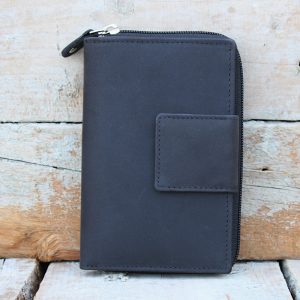
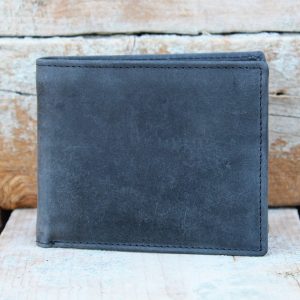
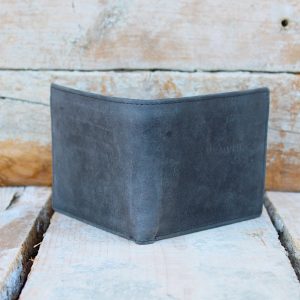
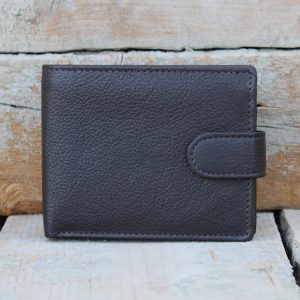
Let’s take a standard bifold wallet as our example. If we were to disassemble it and lay all the pieces flat, the total surface area would be surprisingly large.
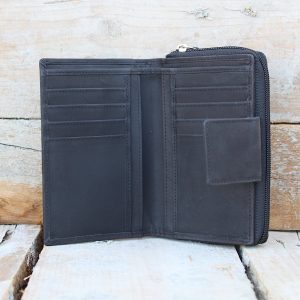
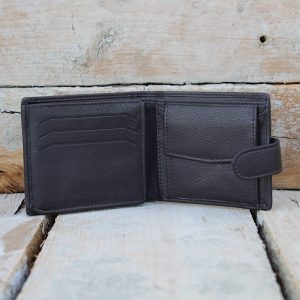
A typical bifold might consist of:
► 2 large exterior panels
► 2-4 interior panel layers for card slots
► 1-2 gussets or interior pockets
► Various small straps and tabs
When you add up all these pieces, plus the necessary buffer for cutting and stitching seams, you arrive at that 1 to 1.5 square feet – 930 to 1,395 square centimeters figure.
So, if a hide is 55 square feet – 51 square centimeters, and a wallet uses 1.5 square feet… – 1.395 square centimeters… that means one hide could theoretically make about 36 wallets, right?
Wrong. This is the biggest misconception.
The Reality: Why One Hide Doesn’t Yield 36 Wallets
This theoretical math doesn’t account for the most important factor: The relentless pursuit of quality.
► The Quest for the Perfect Grain: A craftsperson making a premium wallet will only use the choicest sections from the back of the hide. They will reject any area with stretch marks, scars, or uneven texture. This dramatically reduces the usable area.
► The “Waste” is Immense: The irregular shape of the hide, combined with the need to avoid imperfections, means that a significant portion is simply not suitable for a high-end product. This “waste” isn’t thrown away—it might be used for smaller goods like keychains, watch straps, or test pieces—but it cannot be used for the wallet itself.
► It’s Not a Jigsaw Puzzle: You can’t pack wallet patterns edge-to-edge. There must be space between each piece on the hide for cutting. This further reduces the yield.
In reality, from a 55 square foot – 5.11 square meters hide, a discerning artisan making high-quality wallets might only get 10-15 wallets, depending on the size and complexity. They sacrifice quantity for uncompromising quality.
Beyond the Square Footage: The “Hidden” Leather
The story doesn’t end with the cut pieces. There’s more to the wallet than just surface area:
► Thickness Matters: Wallet leather is typically 3-4 oz thick (about 1.2-1.6 mm). This requires skiving (shaving) the hide down to the perfect weight, a process that requires skill and adds to the material’s value.
► The Price of Precision: When you buy a handmade wallet, you’re not just paying for your 1.5 square feet – 1.395 square cm of leather. You’re paying for your share of the entire hide that the artisan had to purchase to find your perfect piece.
The True Value of a Handmade Wallet
Understanding the journey from hide to wallet reframes what you’re holding. You aren’t just holding a product; you’re holding the most resilient 3% of a massive animal, meticulously selected and transformed by human hands.
That’s why two wallets made from the “same” leather can look and feel completely different. Each one comes from a unique part of a unique hide, carrying its own story in its grain.
The question “How much leather?” is answered not in square feet, but in selectivity, skill, and the commitment to using the very best of what nature provides.
Discover the unique character of a wallet crafted from the finest part of the hide. Explore our collection and find the one that speaks to you.
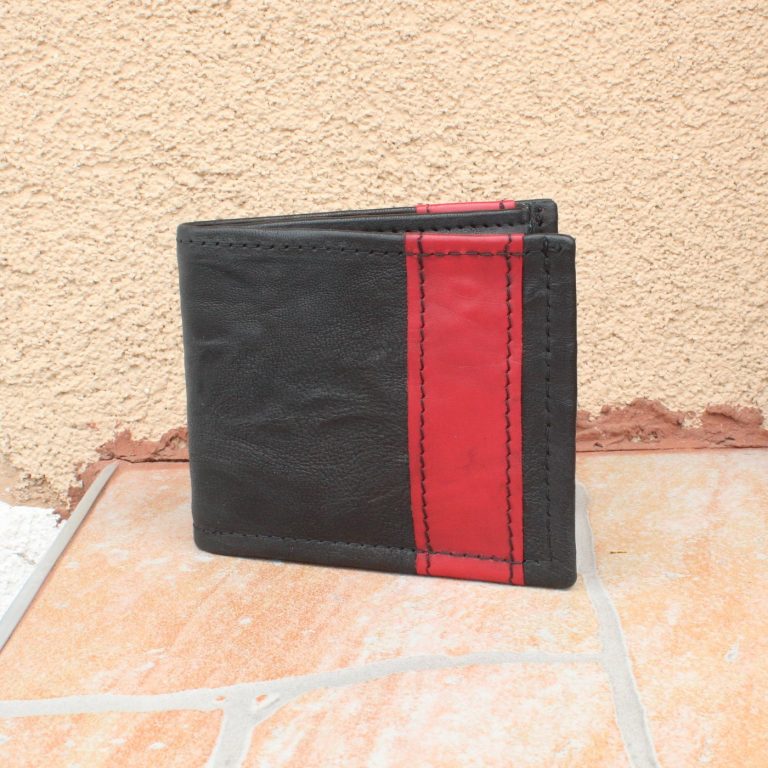
Black & Red Top-Grain Leather Wallet
Original price was: $112.$82Current price is: $82.Burgundy Croc-Embossed Leather Wallet
Original price was: $150.$80Current price is: $80.Classic Men’s Black Leather Wallet
Original price was: $130.$70Current price is: $70.Customized Men’s Handmade Leather Wallet
Original price was: $99.$65Current price is: $65.Distressed Tan Leather Bifold Wallet/Cardholder
Original price was: $99.$55Current price is: $55.Handmade Leather Wallet Without Coin Pocket
Original price was: $110.$70Current price is: $70.Handmade Skull Embossed Bifold Wallet
Original price was: $120.$85Current price is: $85.Large Men’s Wallet with Coin Pocket
Original price was: $140.$85Current price is: $85.Men’s Bifold Wallet with Elastic Band
Original price was: $110.$60Current price is: $60.Men’s Black Leather Bifold Wallet – Top Grain, Red Stitch Contrast
Original price was: $80.$44Current price is: $44.Men’s Black Leather Wallet – Personalized Engraved
Original price was: $130.$70Current price is: $70.Men’s Brown Leather Checkbook Wallet
Original price was: $130.$88Current price is: $88.Men’s Classic Small Folding Wallet
Original price was: $110.$62Current price is: $62.Men’s Colorful Leather Wallet
Original price was: $120.$69Current price is: $69.Men’s Dark Brown Leather Trifold Wallet
Original price was: $120.$70Current price is: $70.Men’s Handmade Brown Leather Wallet
Original price was: $125.$75Current price is: $75.Men’s Long Leather Wallet – Black Top-Grain
Original price was: $110.$90Current price is: $90.Men’s Luxury Black Leather Wallet
Original price was: $140.$90Current price is: $90.Men’s Slim Leather Wallet with ID Window
Original price was: $100.$60Current price is: $60.Men’s Trifold Leather Wallet with Snap Closure
Original price was: $120.$60Current price is: $60.