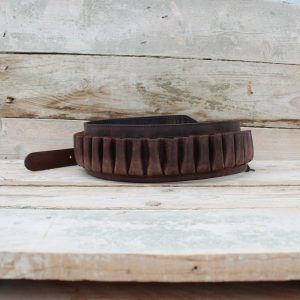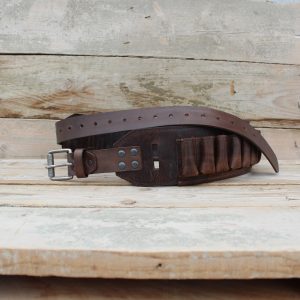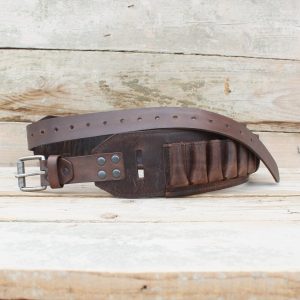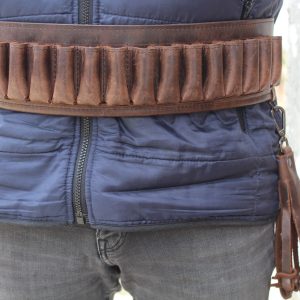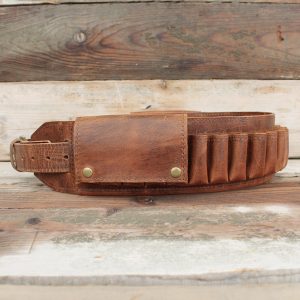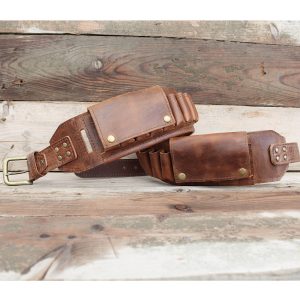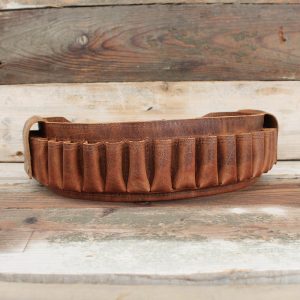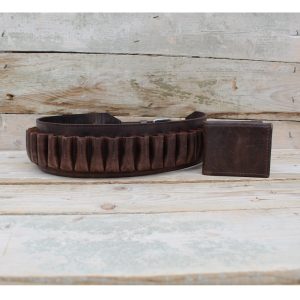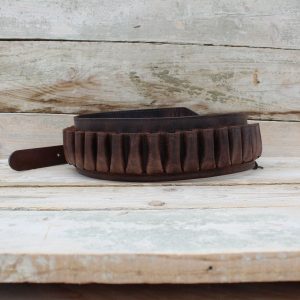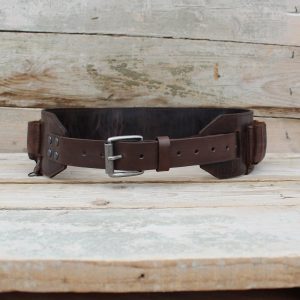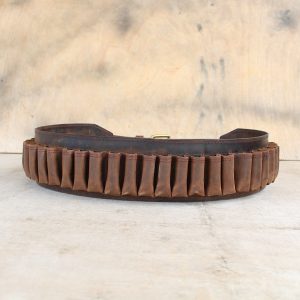
Breaking In Your New Leather Cartridge Belt: The Art of Creating a Perfect Fit
Your leather cartridge belt isn’t supposed to be comfortable right away. Learn the right way to transform stiff new leather into a custom-molded companion that will last for generations.
There’s a moment of truth every hunter experiences with new leather gear: you buckle on that beautiful, stiff cartridge belt and realize it feels more like armor than equipment. Don’t worry—this is exactly how it should be. Quality leather doesn’t come broken in; it earns its comfort through proper use and care.
A well-made leather cartridge belt is like a good hunting partner: it takes time to learn your ways, but once it does, it becomes irreplaceable. Here’s how to navigate those crucial first weeks to ensure your belt becomes a custom-fit companion rather than a closet decoration.
The Philosophy of Breaking In: Why This Process Matters
Before we dive into techniques, understand what’s happening to your leather. Full-grain leather is dense with natural fibers and oils. The breaking-in process isn’t about “softening” the leather so much as encouraging it to mold to your unique shape while maintaining its structural integrity.
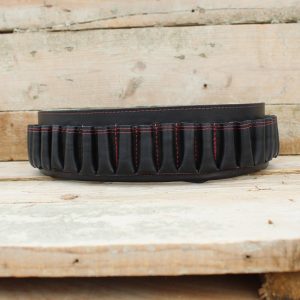
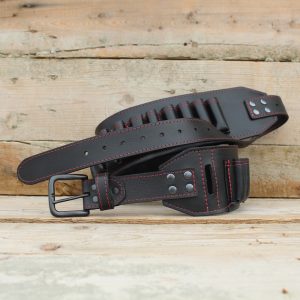
What you’re aiming for: A belt that holds its form when empty but conforms to your hip movement when worn. The shell loops should be firm enough to secure ammunition but supple enough for smooth, one-handed shell access.
The Essential DOs: Building a Foundation for Decades of Use
DO: Start Slow and Build Up
– First Week: Wear your belt for 1-2 hours daily around the house or during light activities. This allows the leather to gradually adapt to your body temperature and movement without stress.
– Second Week: Increase to half-day wear during routine tasks. The goal is consistent, gentle pressure rather than marathon sessions.
DO: Use Your Body’s Natural Oils
– The Natural Method: Simply wearing the belt over your clothing (or against a thin base layer) lets your body heat and natural oils do the work. This slow method preserves the leather’s integrity and develops the most authentic patina.
– Movement Matters: Perform the motions you’ll use while hunting—bending, twisting, reaching for shells. This works the critical stress points where the belt needs to be most flexible.
DO: Condition Thoughtfully
– Timing is Everything: Wait until the belt shows slight stiffness resistance (usually after 2-3 weeks of regular wear) before first conditioning.
– Product Choice: Use a natural leather conditioner or a product specifically recommended by the maker. Apply sparingly with a clean cloth, focusing on areas that receive the most flex.
– Application Technique: Rub in thoroughly and let it absorb for 15 minutes, then buff off any excess. The leather should feel nourished, not greasy.
DO: Store It Properly Between Uses
– The Gold Standard: Hang it over a wide hanger or lay it flat. This maintains the shape it’s beginning to learn.
– Loading Strategy: For the first month, store it with a few shells in alternating loops. This helps form the loop memory without overstressing one area.
DO: Embrace the Journey
– Document the Change: Take photos weekly. Watching the color deepen and creases form in the right places is part of the leather’s story becoming your story.
– Patience Pays: A proper break-in takes 4-6 weeks of regular use. Rushing this process compromises the leather’s longevity.
The Critical DON’Ts: Avoiding Costly Mistakes
DON’T: Soak or Submerge the Leather
– No Hot Water Tricks: However tempting, never use hot water to accelerate softening. This strips natural oils and can cause permanent damage.
– Avoid Sweat Saturation: If you work up a serious sweat, let the belt dry naturally away from direct heat. Rotate with another belt if you’re hunting multiple consecutive days.
DON’T: Use Artificial Heat Sources
– No Hair Dryers: Artificial heat dries out leather, making it brittle and prone to cracking.
– Avoid Car Dashboards: However satisfying those sun-baked leather videos may be, direct heat is one of the fastest ways to ruin good leather.
– Stay Away from Ovens: This should go without saying, but we’ve seen the attempts. Never put leather in an oven.
DON’T: Over-Condition
– The “More is Better” Myth: Over-conditioning clogs the leather’s pores, leading to surface buildup that attracts dirt and prevents proper breathing.
– Watch for Signs: If your belt feels tacky or looks excessively dark, you’ve used too much product. Wipe off excess immediately.
– Frequency Matters: For most hunting conditions, conditioning every 3-6 months is sufficient after the initial break-in.
DON’T: Force Shells or Overload
– Gentle Persuasion: If a loop seems tight, work a spent shell casing in and out a few times rather than forcing a live round.
– Respect the Design: Don’t exceed the intended shell capacity. Those extra shells put uneven stress on the leather and stitching.
DON’T: Store It Loaded Long-Term
– Prevent Memory Loss: Constant pressure in the same loops can lead to permanent stretching. Empty the belt when not in use for extended periods.
– Avoid Tight Rolls: Never store the belt tightly rolled, as this creates harsh creases that can crack over time.
Troubleshooting Common Break-In Challenges
“The belt is still stiff after a month…”
This is normal for thick, quality leather. Focus on wearing it during active tasks—cleaning gear, range sessions, or hiking. Movement is more effective than passive wear.
“Some loops are tighter than others…”
Natural variation is common. Use spent shells to gently work the tighter loops, rotating them periodically.
“The buckle area remains rigid…”
Work the tongue in and out of the buckle repeatedly while watching television. This smooths the internal surfaces without stress.
“I notice slight color variations…”
This is the beautiful character of natural leather emerging. These variations will even out over time with proper care and use.
The Long Game: From Breaking In to Wearing In
The breaking-in period is just the first chapter. What follows is the “wearing in”—the years of service where your belt develops its unique story.
– Seasonal Care: As temperatures and humidity change, your belt may feel different. This is normal leather behavior.
– Embrace the Marks: That scuff from crawling under a fence, the dark spot from an unexpected rain—these aren’t flaws. They’re the records of your adventures.
– Annual Check-ups: Once yearly, give your belt a thorough inspection. Check stitching, hardware, and overall condition. A little maintenance prevents major issues.
The Reward at the End of the Process
There comes a morning—usually about six weeks in—when you buckle on your belt and don’t think about it again until you take it off at day’s end. That’s when you know the process is complete. The leather has learned your body, the loops release shells with just the right resistance, and what was once stiff new gear has become an extension of yourself.
This transformation is why we choose leather. It’s not just a shell holder; it’s a living material that adapts to your hunting life, becoming more personal and effective with each passing season.
Care for Your Investment
Keep your leather performing season after season with our specially formulated leather care products, designed specifically for the demands of hunting gear.
12 Gauge Leather Cartridge Belt – Handmade Crazy Horse Leather – Custom 12GA • 16GA • 20GA
Original price was: $262.$192Current price is: $192.12 Gauge Shotgun Shell Belt – Handmade Crazy Horse Leather Ammo Belt
Original price was: $250.$190Current price is: $190.9.3×62 Cartridge Belt Slide – Handmade Crazy Horse Leather with Flap Closure
Original price was: $100.$80Current price is: $80.Black Leather Cartridge Belt – Handmade for 12GA • 16GA • 20GA
Original price was: $262.$191Current price is: $191.Brown Crazy Horse Leather Cartridge Belt– 12GA/16GA/20GA/28GA
Original price was: $260.$193Current price is: $193.Brown Leather Cartridge Belt Slide – 12GA • 16GA • 20GA
Original price was: $160.$98Current price is: $98.Cartridge Belt Slide and Wallet Matching Set – 12GA • 16GA • 20GA
Original price was: $220.$170Current price is: $170.Custom .30-06 Leather Hunting Set – Cartridge Slide & Belt
Original price was: $146.$145Current price is: $145.Custom Leather Cartridge Belt – Handmade Crazy Horse | 12GA, 16GA & 20GA
Original price was: $310.$210Current price is: $210.Custom Leather Cartridge Belt Slide
Original price was: $150.$80Current price is: $80.Dual-Flap Leather Cartridge Belt – Handmade for 12GA • 16GA • 20GA
Original price was: $265.$195Current price is: $195.Dual-Flap Leather Shotgun Shell Belt – Handmade for 12GA • 16GA • 20GA
Original price was: $270.$195Current price is: $195.Flap-Closure Leather Cartridge Belt – 12GA • 16GA • 20GA
Original price was: $420.$300Current price is: $300.Handmade .308 Winchester Leather Cartridge Belt Slide
Original price was: $140.$95Current price is: $95.Handmade Black Leather Shotgun Shell Belt – Custom 12GA/16GA/20GA
Original price was: $290.$196Current price is: $196.Handmade Crazy Horse Leather Cartridge Belt & Shoulder Bag Set | 12GA • 16GA • 20GA • 28GA
Original price was: $420.$299Current price is: $299.Handmade Leather Cartridge Belt & Wallet Set – 12GA/16GA/20GA
Original price was: $380.$290Current price is: $290.Handmade Leather Cartridge Belt Slide
Original price was: $120.$70Current price is: $70.Handmade Leather Shotgun Shell Belt – 12GA/16GA/20GA
Original price was: $280.$195Current price is: $195.Heritage Leather Cartridge Belt – Handmade for 12GA • 16GA • 20GA
Original price was: $270.$191Current price is: $191.Hybrid Leather Cartridge Belt – 12GA • 16GA • 20GA
Original price was: $400.$280Current price is: $280.Leather Cartridge Belt & Cartridge Belt Slide Set – Handmade for 12GA • 16GA • 20GA
Original price was: $300.$240Current price is: $240.Leather Cartridge Belt & Matching Slide Set
Original price was: $390.$290Current price is: $290.Leather Cartridge Belt, Cartridge Belt Slide & Wallet Set – Handmade for 12GA • 16GA • 20GA
Original price was: $360.$290Current price is: $290.