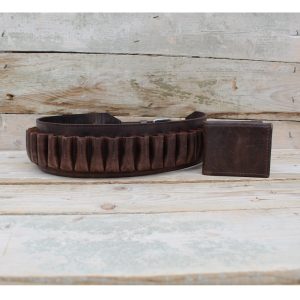
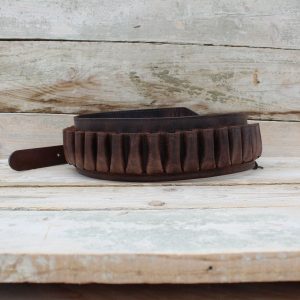
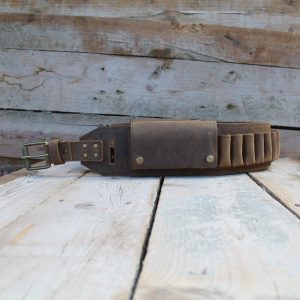
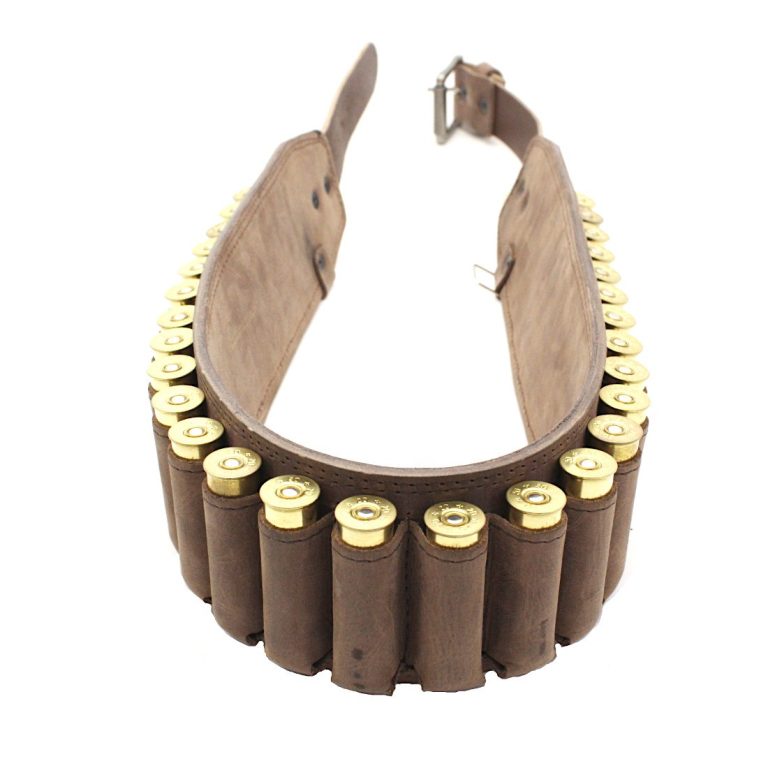
In a world of identical products, true craftsmanship tells a different story. Learn to spot the subtle details that separate an heirloom from an accessory.
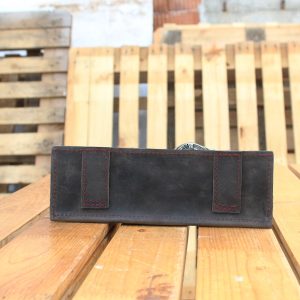
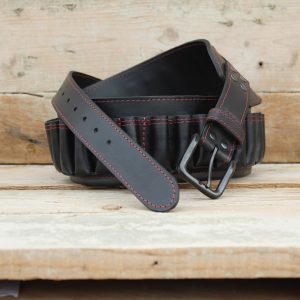
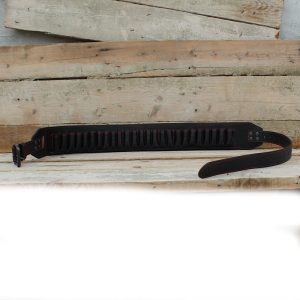
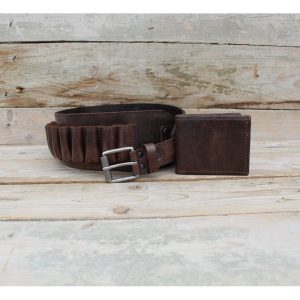
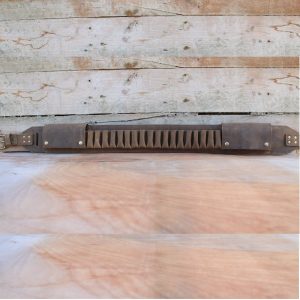
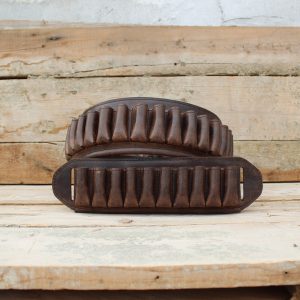
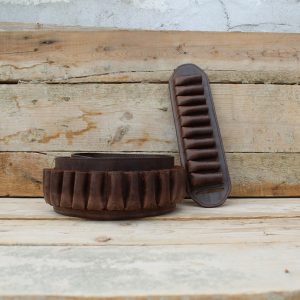
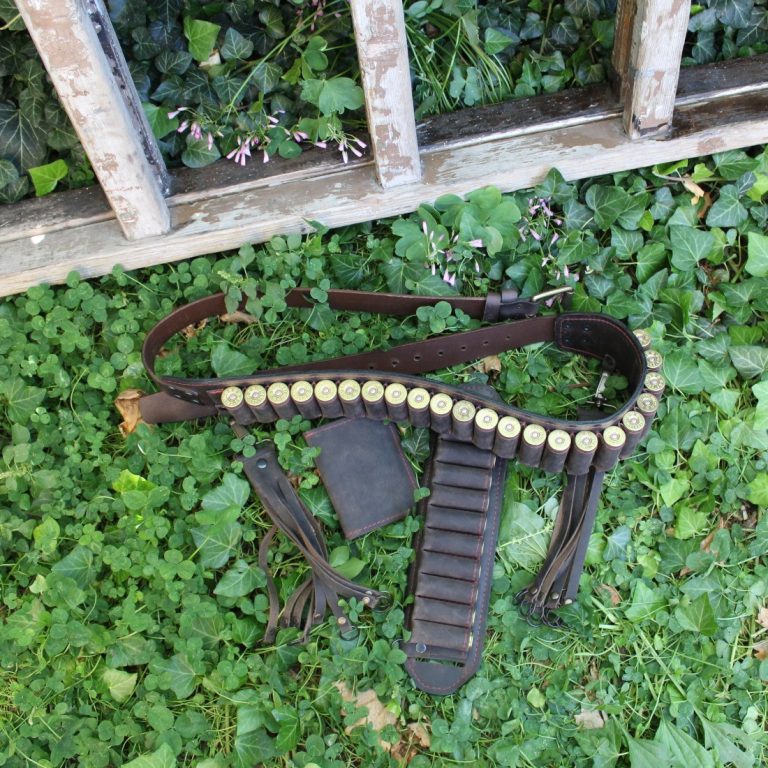
You’re looking at two cartridge belts. At a glance, they serve the same purpose: they hold shells. But one is a mass-produced commodity, designed for a quick sale. The other is a handcrafted tool, built for a lifetime of service. The difference isn’t just in the price tag; it’s etched into the very fiber of the leather, the soul of its construction.
For the hunter who views his gear as a long-term investment, knowing these differences is paramount. Here are the five undeniable signs of a handmade leather cartridge belt—the details that factory gear simply cannot replicate.
1. The Story in the Stitching: Lockstitch vs. Chainstitch
This is the most telling sign, often hidden in plain sight.
– The Mass-Produced Tell: Run your finger along the stitching on a factory belt. You’ll likely feel a continuous, machine-made chainstitch. This stitch is created by a single thread looped through itself. Its fatal flaw? If one thread breaks, the entire seam can unravel like a sweater snag, a single point of failure waiting for a thorny thicket or a simple snag.
– The Handmade Hallmark: A true artisan belt uses a lockstitch, sewn with a heavy-duty needle and thread. This is created by two separate threads—the needle thread and the bobbin thread—locking together in the center of the leather. This creates a seam that is incredibly strong and secure. If one stitch is cut, the rest remain locked firmly in place. Look closely: you should see two distinct threads on both sides of the leather. This is the first sign of a belt built to endure.
2. The Soul of the Leather: Character, Not Perfection
Mass production demands uniformity. Craftsmanship embraces character.
– The Mass-Produced Tell: Factory belts often use corrected-grain or bonded leather, which is sanded, stamped with an artificial grain, and coated in a uniform pigment or plastic layer. It looks perfect, yes—but it’s a sterile, lifeless perfection. It feels like plastic because, in many ways, it is. This coating will eventually crack and peel, and it cannot develop a true patina.
– The Handmade Hallmark: An artisan uses full-grain or top-grain leather. This is the strongest part of the hide, with its natural grain, scars, and variations intact. Look for the unique “pull-up” effect of oils in leathers like Crazy Horse—when bent, it lightens in color, revealing its organic nature. These aren’t flaws; they are the hide’s biography. This leather will break in, not break down. It will develop a rich, dark patina unique to your journey—a story written in scuffs and oil, not a mask that eventually fades.
3. The Proof is in the Edges: A Finished Work of Art
The edge of a leather belt is its most vulnerable point, where layers meet and fraying begins. This is where the artisan’s pride truly shows.
– The Mass-Produced Tell: Factory edges are often left raw, rough, and unfinished, or are simply painted with a single coat of edge paint that quickly chips and cracks, revealing the messy, composite layers beneath.
– The Handmade Hallmark: An artisan burnishes and dyes the edges. This is a meticulous, multi-step process of sanding the edge perfectly smooth, applying edge dye, and then using a fast-spinning wood or canvas wheel to generate heat through friction, melting the natural oils and waxes to create a glassy, rounded, and incredibly durable seal. Run your finger along it. It should feel smooth as polished stone, a clear sign that no detail was overlooked.
4. The Temper of the Hide: Supple Strength
“Temper” refers to the stiffness and resilience of the leather. It’s a quality you feel more than see.
– The Mass-Produced Tell: Cheap leather is often either board-stiff (like a cheap wallet) or flimsily soft. It has no substance. It will sag under the weight of shells, lose its shape, and offer no structural support.
The Handmade Hallmark: A quality belt has a firm, supple temper. It should hold its shape proudly when empty, yet be pliable enough to mold comfortably to your body. This is achieved by using thick, vegetable-tanned hides and proper oiling. When you hold it, it should feel substantive and confident in your hands—a partner, not a placeholder. It has a memory that returns to its form, ready for the next hunt.
5. The Harmony of the Hardware: Form Meets Unfailing Function
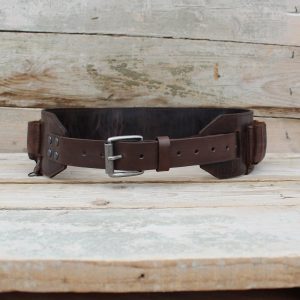
The buckle and keepers are the points of highest stress. They must be as enduring as the leather itself.
– The Mass-Produced Tell: Look for thin, lightweight, chromed-plated or painted hardware. It will feel insubstantial, and the finish will quickly scratch, chip, and rust. The buckle may be attached with a simple, weak spot-weld that will fail under tension.
– The Handmade Hallmark: Artisans use solid, heavy-gauge brass or steel hardware, often solid brass or black-oxidized for superior corrosion resistance. The most telling detail is how it’s attached: look for solid rivets or saddle-stitched leather loops. A solid rivet is hammered and peened over, creating a permanent mechanical bond far stronger than any weld. This is hardware that will outlive you, functioning flawlessly season after season.
The Choice is Yours
A mass-produced belt is a purchase. A handmade cartridge belt is an investment in a companion that will walk every mile with you. It’s the difference between gear that you use and gear that becomes a part of you.
When you know what to look for, the choice becomes clear. You’re not just buying a shell holder. You are investing in a legacy of craftsmanship, ready to be earned in the field and passed down through the generations.
Demand Craftsmanship.
Now that you know the signs, explore our collection of cartridge belts. Every stitch, edge, and buckle is a testament to the art of handmade leatherwork, built to be your trusted companion for a lifetime.
Brown Crazy Horse Leather Shotgun Shell Belt (Cartridge Belt) – 12GA/16GA/20GA/28GA
Original price was: $260.$200Current price is: $200.Custom .30-06 Leather Hunting Set – Slide & Belt
Original price was: $180.$145Current price is: $145.Custom Leather Shotgun Shell Belt (Cartridge Belt) – 12GA/16GA/20GA
Original price was: $310.$210Current price is: $210.Custom Leather Shotgun Shell Belt (Cartridge Belt) Slide
Original price was: $150.$80Current price is: $80.Flap-Closure Leather Shotgun Shell Belt (Cartridge Belt) – 12GA/16GA/20GA
Original price was: $420.$300Current price is: $300.Handmade 308 Winchester Leather Belt Slide
Original price was: $140.$95Current price is: $95.Handmade Black Leather Shotgun Shell Belt (Cartridge Belt)- 12GA/16GA/20GA
Original price was: $300.$190Current price is: $190.Handmade Crazy Horse Leather Shotgun Shell Belt (Cartridge Belt) & Shoulder Bag Set
Original price was: $420.$320Current price is: $320.Handmade Leather Cartridge Belt & Wallet Set – 12GA/16GA/20GA
Original price was: $380.$290Current price is: $290.Handmade Leather Shotgun Shell Belt – 12GA/16GA/20GA
Original price was: $320.$220Current price is: $220.Handmade Leather Shotgun Shell Belt (Cartridge Belt) – 12GA 16GA 20GA
Original price was: $290.$210Current price is: $210.Handmade Leather Shotgun Shell Belt (Cartridge Belt) Slide
Original price was: $120.$70Current price is: $70.Hybrid Flap-Closure Leather Shotgun Shell Belt – 12GA/16GA/20GA
Original price was: $400.$280Current price is: $280.Leather Shotgun Shell Belt – 12GA, 16GA, 20GA
Original price was: $400.$210Current price is: $210.Leather Shotgun Shell Belt (Cartridge Belt) and Slide Matching Set
Original price was: $390.$290Current price is: $290.Matching Set of 2 Leather Shotgun Shell Belt (Cartridge Belt) Slides
Original price was: $200.$140Current price is: $140.Premium Leather Shotgun Shell Belt (Cartridge Belt) – 12GA, 16GA, 20GA
Original price was: $450.$260Current price is: $260.Shotgun Cartridge Belt Slide – 12GA 16GA 20GA
Original price was: $160.$98Current price is: $98.Shotgun Cartridge Belt Slide and Wallet Matching Set
Original price was: $220.$170Current price is: $170.Shotgun Shell Belt and Belt Slide Matching Set – 12GA 16GA 20GA
Original price was: $360.$300Current price is: $300.