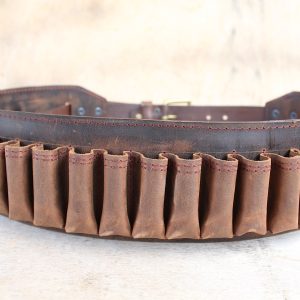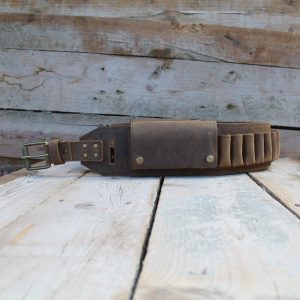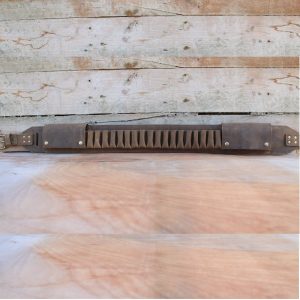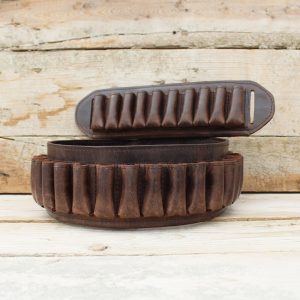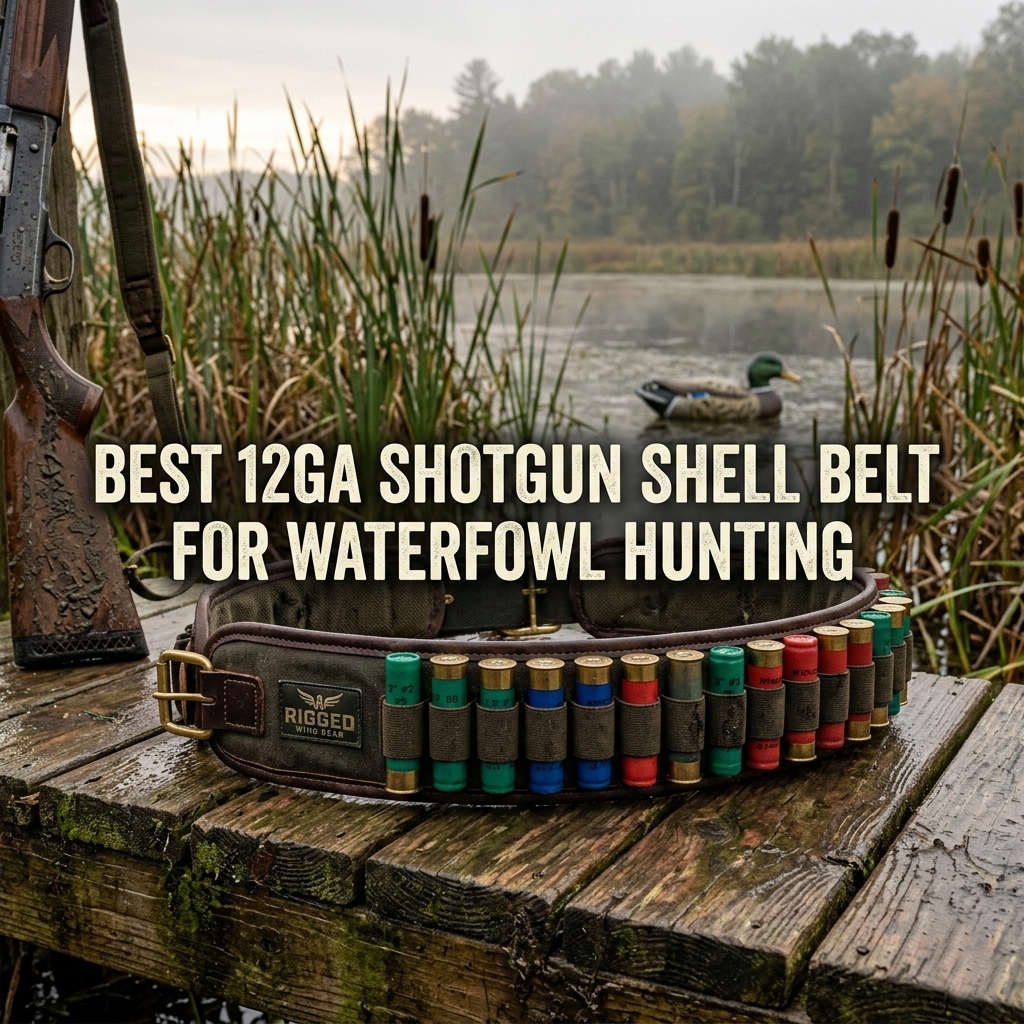
When it comes to waterfowl hunting, the 12GA remains the dominant gauge for a reason. It delivers the pellet count, velocity, and versatility needed for ducks in flooded timber and geese in open agricultural fields. But the gauge itself is only part of the equation.
Serious waterfowl hunters understand that how you carry your shells matters just as much as what you shoot.
A 12GA shotgun shell belt designed specifically for waterfowl conditions must handle weight, moisture, cold temperatures, and repeated movement without compromising stability or shell retention.
In this guide, we break down what truly makes the best 12GA shotgun shell belt for duck and goose hunting — and why leather consistently outperforms synthetic alternatives in demanding environments.
First: Why 12GA Demands a Stronger Belt
Compared to 20GA or 28GA, 12GA shells are heavier and bulkier.
A typical 12GA steel waterfowl load weighs approximately 1.4 to 1.6 ounces per shell. Carry 25–30 shells, and you are placing 2.5 to 4 pounds of concentrated weight around your waist.
That weight creates:
- Constant downward pressure
- Loop stretch stress
- Stitch tension
- Buckle strain
- Movement shift during walking
In wet environments, inferior materials weaken quickly. Nylon absorbs moisture. Elastic loops lose tension. Lightweight stitching fails over time.
The best belt for 12GA waterfowl hunting must be engineered to handle that load consistently — not just when new.
For a complete overview of how 12GA affects your entire gear system, see our 12GA Shotgun Hunting Guide (pillar article), which explains load weight and belt engineering in greater depth.
Waterfowl Conditions: What Your Belt Must Survive
Duck and goose hunting introduce environmental stress most upland hunters never face.
1. Moisture
- Marsh water
- Morning dew
- Rain
- Snow
2. Cold Temperatures
- Freezing mornings
- Late-season ice
- Wind chill exposure
3. Movement
- Stepping into blinds
- Climbing into boats
- Crossing ditches
- Crawling into field layouts
Your shell belt must remain:
- Stable
- Secure
- Tight
- Accessible
Shells that loosen under movement slow down reload time and disrupt rhythm during flights.
What Makes the Best 12GA Shell Belt for Waterfowl?
Here are the critical performance factors.
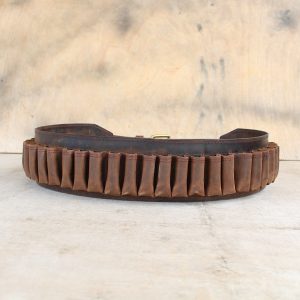
1️⃣ Full-Grain Leather Construction
Full-grain leather offers structural strength that synthetic materials cannot replicate.
Advantages in waterfowl conditions:
- Natural compression grip on shells
- Resistance to tearing under load
- Maintains loop shape over time
- Molds to the hunter’s body
- Improves stability with use
Quality leather does not collapse under 12GA weight. It forms around the shell and maintains consistent retention.
This becomes especially important in freezing temperatures, where synthetic materials often stiffen unevenly.
2️⃣ Reinforced Loop Stitching
12GA waterfowl loads place repeated outward pressure on belt loops.
Over time, weak stitching begins to:
- Stretch
- Gap
- Loosen shell retention
A well-constructed belt uses reinforced stitching patterns and durable thread tension to prevent structural distortion.
This matters most for goose hunters using 3″ magnum loads, which are heavier and longer.
For deeper cold-weather engineering considerations, see our Goose Hunting Gear Guide.
3️⃣ Proper Capacity Without Excess Bulk
Waterfowl hunters typically carry:
- 20–25 shells in duck blinds
- 25–35 shells for goose fields
The best belt provides adequate capacity without creating unnecessary bulk around the waist.
Overloading a belt beyond its optimal capacity reduces mobility and increases fatigue.
Balance is key.
4️⃣ Secure Buckle System
A belt under 4 pounds of ammunition needs reliable closure.
Weak buckles cause:
- Slippage
- Uneven sagging
- Repeated readjustment
A strong, properly anchored buckle maintains alignment even during long walks into marshes or across fields.
Why Experienced Duck Hunters Prefer Leather Over Nylon
Many hunters begin with nylon or elastic shell belts due to lower price points.
Over time, several issues appear:
- Loop stretch
- Shell bounce during movement
- Uneven weight distribution
- Reduced durability in wet conditions
Leather offers long-term performance stability.
It distributes weight evenly and maintains consistent shell spacing. When properly cared for, it withstands moisture exposure far better than synthetic belts that degrade under repeated stress.
This is particularly important for 12GA, where load weight amplifies material weaknesses.
Performance in Cold Weather
Cold temperatures reveal belt quality immediately.
In freezing environments:
- Inferior synthetics become brittle
- Elastic tightens unevenly
- Shell extraction becomes inconsistent
Full-grain leather stiffens slightly but retains structural integrity. Proper conditioning maintains flexibility while preserving grip strength.
Goose hunters operating in late-season conditions benefit most from this stability.
Matching Belt to Load Type
12GA waterfowl hunters may use:
- 2¾” steel loads
- 3″ high-velocity loads
- 3½” magnum goose loads
The best shell belt accommodates consistent shell length and diameter without overstretching loops.
Consistency in loop sizing ensures:
- Smooth reload
- Equal retention
- Reduced movement shift
If you frequently switch between light duck loads and heavier goose loads, consider belt construction carefully.
Weight Distribution and Field Efficiency
Carrying 12GA ammunition improperly leads to:
- Hip fatigue
- Lower back strain
- Uneven posture
- Reduced mobility
A properly structured leather belt distributes weight evenly across the waist, reducing concentrated pressure points.
This is especially important for:
- Long marsh walks
- Field repositioning
- All-day hunts
A stable belt becomes part of your movement system, not a distraction.
Signs You Need a Better 12GA Belt
If you notice:
- Shells loosening
- Belt sagging
- Stitch separation
- Uneven retention
- Constant adjustment
Your current belt is not handling 12GA demands effectively.
Waterfowl hunting amplifies weaknesses quickly.
Final Thoughts: Choosing the Right 12GA Belt for Waterfowl
The best 12GA shotgun shell belt for waterfowl hunting is built for:
- Weight stability
- Cold resistance
- Moisture tolerance
- Reinforced stitching
- Long-term durability
12GA is the most versatile gauge in hunting — but it requires equipment that can match its demands.
When your belt maintains structure under load, your reload stays smooth, your movement remains balanced, and your focus stays where it belongs — on the birds.
For a complete breakdown of how 12GA load weight impacts belt engineering, return to our 12GA Shotgun Hunting Guide.
For species-specific setups:
- See our Duck Hunting Gear Guide
- See our Goose Hunting Gear Guide
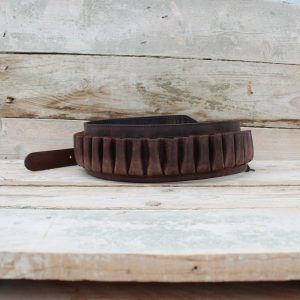
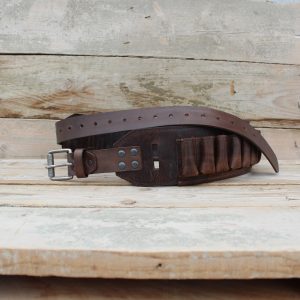
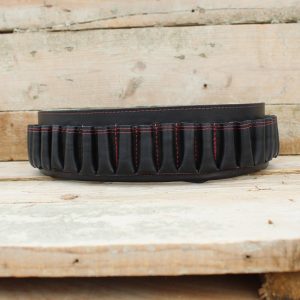
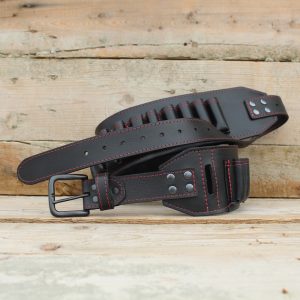
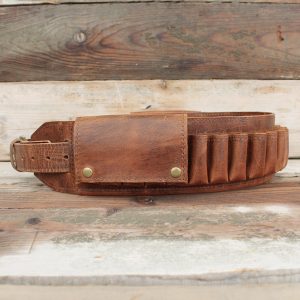
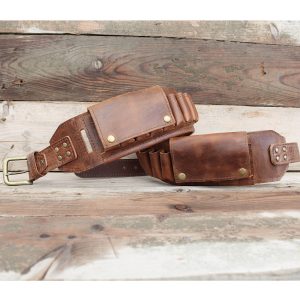
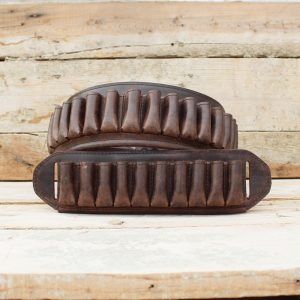
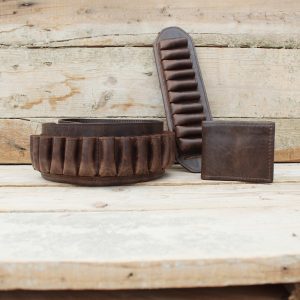
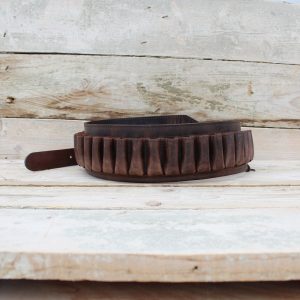
Check Out a Few of Our Handmade Leather Shotgun Shell Belts
12 Gauge Leather Cartridge Belt – Handmade Crazy Horse Leather – Custom 12GA • 16GA • 20GA
Original price was: $262.$192Current price is: $192.9.3×62 Cartridge Belt Slide – Handmade Crazy Horse Leather with Flap Closure
Original price was: $100.$80Current price is: $80.Black Leather Cartridge Belt – Handmade for 12GA • 16GA • 20GA
Original price was: $262.$191Current price is: $191.Brown Crazy Horse Leather Cartridge Belt– 12GA/16GA/20GA/28GA
Original price was: $260.$193Current price is: $193.Custom .30-06 Leather Hunting Set – Cartridge Slide & Belt
Original price was: $146.$145Current price is: $145.Custom Leather Cartridge Belt – Handmade Crazy Horse | 12GA, 16GA & 20GA
Original price was: $310.$210Current price is: $210.Custom Leather Cartridge Belt Slide
Original price was: $150.$80Current price is: $80.Dual-Flap Leather Cartridge Belt – Handmade for 12GA • 16GA • 20GA
Original price was: $265.$195Current price is: $195.Flap-Closure Leather Cartridge Belt – 12GA • 16GA • 20GA
Original price was: $420.$300Current price is: $300.Handmade .308 Winchester Leather Cartridge Belt Slide
Original price was: $140.$95Current price is: $95.Handmade Crazy Horse Leather Cartridge Belt & Shoulder Bag Set | 12GA • 16GA • 20GA • 28GA
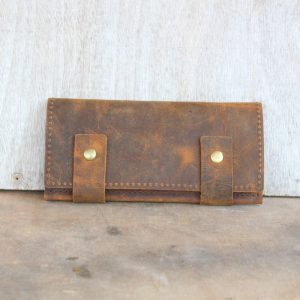
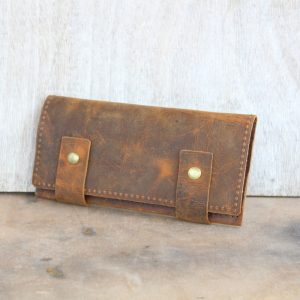
Original price was: $420.$299Current price is: $299.Handmade Leather Cartridge Belt & Wallet Set – 12GA/16GA/20GA
Original price was: $380.$290Current price is: $290.Handmade Leather Cartridge Belt Slide
Original price was: $120.$70Current price is: $70.Heritage Leather Cartridge Belt – Handmade for 12GA • 16GA • 20GA
Original price was: $270.$191Current price is: $191.Hybrid Leather Cartridge Belt – 12GA • 16GA • 20GA
Original price was: $400.$280Current price is: $280.Leather Cartridge Belt & Cartridge Belt Slide Set – Handmade for 12GA • 16GA • 20GA
Original price was: $300.$240Current price is: $240.Leather Cartridge Belt & Matching Slide Set
Original price was: $390.$290Current price is: $290.Leather Cartridge Belt, Cartridge Belt Slide & Wallet Set – Handmade for 12GA • 16GA • 20GA
Original price was: $360.$290Current price is: $290.Matching Set of 2 Leather Cartridge Belt Slides
Original price was: $200.$140Current price is: $140.Personalised Crazy Horse Leather Cartridge Belt | 12GA • 16GA • 20GA
Original price was: $290.$190Current price is: $190.Premium Leather Cartridge Belt – 12GA • 16GA • 20GA
Original price was: $450.$260Current price is: $260.